Taro Daniel on Beating the Biggest Stars and Life on Tour

 Apple Podcasts

 Spotify

 Overcast

 Castro

 RSS Feed
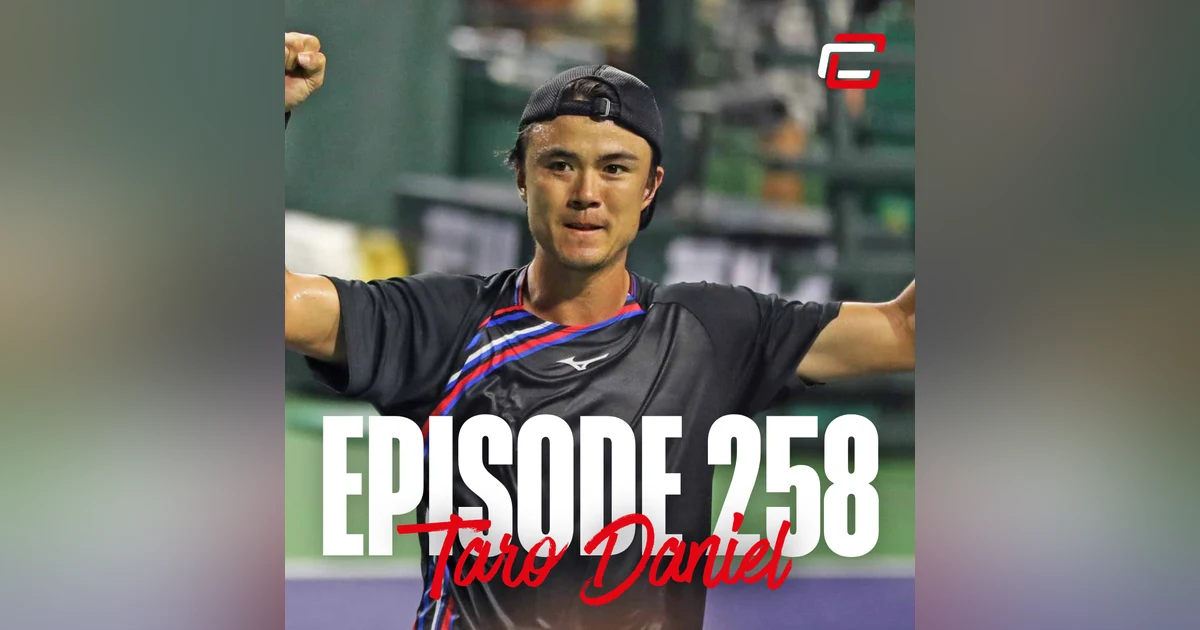
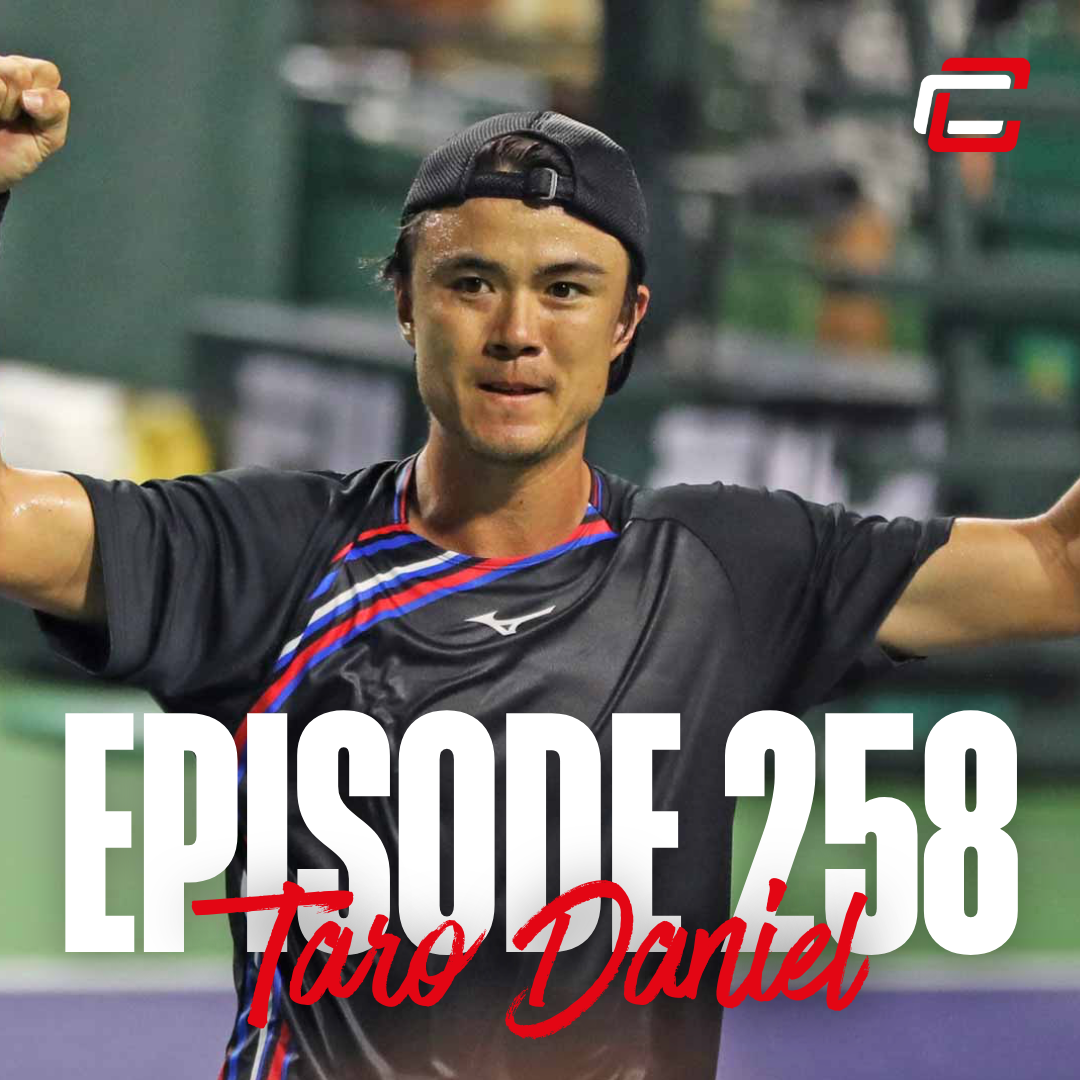
Taro Daniel is an American-Japanese pro tennis player and Olympian who´s reached a career high of 58 in the world.
He joins Dan to chat through his tennis journey from his upbringing in Japan, the United States and Spain, to wins over some of the biggest names in the sport including Novak Djokovic, Andy Murray, Casper Ruud & Ben Shelton.
Taro speaks openly about the highs and lows of constantly touring, the challenges of maintaining mental health in a competitive environment, and how tennis has changed post-COVID.
Episode Highlights:
- The importance of team dynamics and personal relationships in navigating the ups and downs of his career.
- Find out the big changes he´s witnessed on the tour since going pro in 2010.
- The advantages some junior payers had in their training being born in the noughties compared to the nineties!
- Taro tells us his toughest ever opponent and who he likes playing the least.
Links Mentioned in this Episode:-
- Follow Taro Daniel on Instagram
- SotoTennis Academy
- Episode 25: John Millman
You can now watch clips and full episodes of Control the Controllables on YouTube: www.youtube.com/@ctc.podcast

Episode 258: Taro Daniel on Beating the Biggest Stars and Life on Tour
DISCLAIMER: Please note we use a transcription service, so there may be some errors in the following transcript for the episode. If you can, refer to the audio for the exact quotations.
Dan Kiernan (00:09)
Welcome to episode 258 of Control the Controllables. And we have Taro Daniel as our guest today. Now, Taro has had a fantastic career. He's still very much live, playing full-time professional tennis right now. He has been as high as 58 in the world. But many of you, because people that watch tennis, they'll see the big matches, right? He came very close.
He was a set and a break up on Rafael Nadal back in 2017, in the second round of the US Open. And then Rafael Nadal went on to then win that US Open. But he's then had wins over Sir Andy Murray back in 2022 at the Australian Open. He also had a win over, whether you like it or not, the greatest male player of all time, in Novak Djokovic, at Indian Wells in 2018.
And then, over the last two years, he's still, he's had wins over Casper Ruud in Acapulco. He's had wins over Alexander Zverev, 2023, Miami. And then last year in Auckland, over the recent top 10 player in the world in Ben Shelton.
And Taro has, he's got the mind. He likes to think about things, and he looks at the bigger picture of tennis, and we get into all sorts of topics, which I'm sure you will love. I certainly did. You know, someone who loves tennis, who can talk about tennis, who can listen to tennis all day long, I can't think of a better guest than Taro Daniel.
So I'm going to pass you over to this week's guest. So Taro Daniel, a big welcome to Control the Controllables. How are you doing?
Taro Daniel (01:58)
Well, thank you very much for having me. All good. I'm in Japan currently, just having some days of practice before going back on tour.
Dan Kiernan (02:07)
And for the listener, it's 6 a.m. in Japan. So this is a big commitment from you. It's 11 p.m. in Paris. So we're both kind of at both ends of the day to make this happen. So thank you. And actually, to start us off, actually, is Japan home? I think, because you were born in the States, is that correct?
Taro Daniel (02:30)
Yes, yes. I was born in the States. I grew up in Japan till I was, like, thirteen. And then I moved, we moved to Spain when I was, like, thirteen, up until I was, like, twenty-two, twenty-three. So since then I've been kind of, you know, in between the US and Japan. So officially my home is the US right now.
But whenever I can, and have a bit more space, I try to come back to Japan as much as I can. I have some friends here. I try to get some sponsorship stuff done whenever I can, you know. And I do see more of my future post-career in Japan. You know, whenever I can, whenever I have, like, two weeks, three weeks, I try and come here.
Dan Kiernan (03:15)
And I imagine that you're a bit of a star in Japan, whereas in the States you probably can just walk around without people knowing who you are.
Taro Daniel (03:24)
Yeah, I, I mean, people definitely are a little bit more, like, yeah, like, starstruck... a fan culture here. Like, there's more of a, like, a fan culture in Japan versus the US or Europe. But still, tennis is very unrecognised, I think, for how good we are.
So that's, that's, that's something that I struggle... that I've struggled with a lot the last few years, really. And not so much maybe the stardom part, but, you know, just general, like, recognition from both the tours and the public of, like, where we are.
Dan Kiernan (04:01)
So what's the biggest sport in Japan, then? Where's the kind of stardom gone in Japan, in terms of athletes?
Taro Daniel (04:09)
Right now, definitely it's baseball, because of Shohei Ohtani. This one massive guy, he's taking over, taking over everything, really. It used to be Kei... tennis became really big. But tennis has always been really big in Japan. It's been a solid number three, number four sport. And it doesn't really matter if there's, you know, Kei or Naomi Osaka popping in, the, the, the baseline doesn't really change.
But with baseball, it's been, I mean, the amount of mass media, that, that coverage that they have for baseball is, is, is, it's just completely different. So Ohtani's everywhere. In Tokyo, like, you see him on all the, the, the advertisements. No, he plays in the, he plays in the US.
Dan Kiernan (04:55)
Play in Japan. You've got a fascinating story, right? And you've had a fantastic career. I think it's really important that we get to speak to people like yourself, you know. People that, I know, as a tennis person, you've had a brilliant career, and we'll get to some of your amazing matches that you've played.
And you've played some of the best players in the world, and beaten some of the best players in the world. You know, you've had a really, really solid, strong career, but that comes with its ebbs and flows, right? And, and ups and downs.
And certainly 2025, your current record, you've played 20 matches, you've won four. You know, it's certainly, on paper, to someone looking in, it seems like it's been a challenging year. How has 2025 been for you? What position are you now in? How do you then deal with that mentally, moving into the rest of the year?
Taro Daniel (05:59)
Yeah, it's always tricky. I mean, these moments, you know, I've experienced these, like, periods where I don't win matches, but this one's the longest one I've ever had. I'd be lying if I said I know what I need to fix exactly, right?
Like, on one hand, I feel like I'm being swallowed by this, like, swarming amount of new players that play a completely different game, because tennis has changed so much, like, since COVID, really.
But at the same time, I know that if I keep working on things, you know, like, value-driven speech would be, like, you know, I'm doing all the right things, like, things should turn, the tide should turn at some point, and I can't be, like, trying to grab the results. I have to stay really patient. So that's really, like, shifting between these two: you know, my value, and this really kind of fear of losing my spot, really.
And the truth is, a lot of people around my age have lost their spot, or older. And amazing players that were top ten, top twenty, those guys are not here anymore. So, you know, it's also giving myself credit that I'm still here, despite all the newcomers.
But yeah, I'm trying to figure it... it's also, like, tennis-wise, you know, it's like, I've always been a very solid baseline player, but I've needed to adapt over the last few years to be able to play more aggressively, step forward a little bit more, and all that.
But at the same time, I feel like now that's not working so well, because I lose my strength when I kind of try to play more aggressively, and I need to kind of go back to the basics. But then still not, not just put the ball in the court. Kind of that balance is always... I mean, everybody knows, even the amateur player knows, like, how much do I hit, how strong do I hit? That challenge is always gonna be there, no matter how good you are, I guess.
Dan Kiernan (08:13)
The risk and reward, isn't it? The risk and reward of the game. And already there's so many interesting things you've said that I want to jump into. But before I jump into some of those bits: how do you work through this? What I'm fascinated by is the mental side of how you do that.
Because I think our minds, naturally, when things aren't going as well as we want, will look to search, to validate, to blame. It's just, it's human nature, right? It's, it's the way that our, it's the way that our brains work.
So how much do you lean on a coach? How much do you lean on family, friends? You know, what's that process look like for you, to, I guess, give yourself that solid grounding, to be able to say, okay, this is the process, this is what I believe in, this is what I do trust? Of course, you're gonna have some doubts.
Talk us through how you go through that process. And I guess, specifically, of interest for me is how you go through that process with your coach, actually, and how you lean on your coach in this position.
Taro Daniel (09:20)
Well, I, I'm really proud of the team I have. It's strange, like, strangely, the last few years have been some of the best years of my career, but they were kind of maybe some of my most miserable ones, because I struggled... there's a certain mental thing I struggled with that didn't really have much to do with tennis. But, you know, the tennis went well.
But now it's almost like, you know, that, that struggle part is not there anymore this year. So I'm able to focus on tennis, and I'm actually happier in my life. And I have this space for tennis, but the results are not there.
But, you know, with my team, it's been a very slow process of building, and me growing, and them understanding how I work. This kind of slow, tedious process. We've built the relationship over the last years. You know, it's, it's been, like, a process of five, six years.
I've always been a nice guy, but I couldn't always communicate, like, what my needs were. I didn't understand why I would get upset and stuff. And, you know, and then they would have their way of teaching, which didn't always match with the way I needed it. But if I don't say that to them, then, you know, there's no growth in our space, I guess. So that's been really the really important part, for both of, you know, both me and my team.
You know, Sven and Mitsuru Takada. So Sven Groeneveld and Mitsuru Takada are currently... like, Mitsuru Takada's travelling with me. He's, like, my full-time coach currently, and Sven's kind of my advisor in the back. He's working with Sorana Cîrstea. But so those two guys, I've been with them, you know, for the past, like, five years at least, in different distances.
And then my physical trainer, and, you know, currently I have my partner, my girlfriend, which, you know, all these things are a super important part of my life. So I guess I deal with the difficulties very differently now compared to when I was twenty-two, twenty-three. Everything was about tennis when I was twenty-two, twenty-three.
Now it's more like, okay, I have these people in my life, and they care about me no matter what. And that's their focus, to keep telling me, okay...
Taro Daniel (11:41)
'Cause my, my default setting always has been, really... this is embarrassing to say, but, you know, I had to be successful in order to find the right, like, partner in my, like, to attract beautiful women. And I think most men have it, they just don't admit it, right?
But, like, we, you know, I have had this, like, insecurity of not being attractive to the other sex, and, and I had to fight so hard in order to, in order to be able to do that. And, well, at some points it was true, like, that I, I, you know, I, like, maybe really focusing on my career, so that I am a more attractive person, maybe at some point applied.
Dan Kiernan (12:25)
Did you link a ranking to that? Did you link a, like, almost, like, top 50 in the world gets you a nine out of 10 girl, top 100 gets you an eight out of 10 girl? Did you almost have a, almost an objective ranking that you linked in your head?
Taro Daniel (12:41)
There was no specific number. And that's the tricky part with all these things, is that they're just tricks, and they're not true. You know, so they're just, like, okay, of course, like, you need to be making money, which is top hundred, more or less. You need to have a certain level of recognition, which is also top... so basically top hundred is more or less that area.
But there wasn't any specific place, because you can't get enough with that kind of, with that kind of thought pattern. Like, it doesn't matter if you're Federer or Nadal, you know, then you're not gonna have... then you're unsatisfied with the lack of the twenty-fifth slam, and, you know, the, the fourth Olympics, and whatever.
So, and then that's also a human condition, I guess, that, especially as athletes, like, we're, we're prone to, like, really keep chasing. And the tennis circuit makes us chase a lot of things, way more than necessary. So, kind of, now it's more like having that kind of baseline, really good relationships outside of my game.
And I know that if I, like, just, if I say, like, you know, screw it, I just can't win matches, I'm gonna quit, you know, next week, then, you know, they'll, they'll probably tell me, like, okay, are you doing this because... are you quitting because, you know, you're scared you're gonna lose more? Or, like, do you... but if you're really ready to quit, then we're there for you, kind of. You know, I have that kind of relationship with all my people, with all my closest people.
Dan Kiernan (14:21)
And it's so, I think it's so admirable that you've allowed those relationships to get to that stage, because I think in the sport that we're in, and now with social media and with all of these... like you're saying, there is, there's a hierarchy, there's this comparative feeling that goes on, there's a constant pressure.
It might be from a sponsor, it might be for... I think every player obviously has the financial struggles and pressure, right, and the holy grail of certain rankings, or whatever it might be.
And what I see, and have seen for many years, is players are always looking for reasons why they're not doing something, or why they're losing some matches. And very few players are willing to actually look internally. So who are you gonna blame? You know, you're gonna blame the bad draws, you're gonna blame the ATP, the way they set it up.
And obviously coaches, fitness coaches and people around you tend to be the first people that do get that blame. Hence why I think we see a bit of a merry-go-round in coaches. And, you know, you see some players that are changing coaches every couple of weeks.
You know, so I think it's so... whereas what we also know is, to get to a real strength of relationship, where trust is involved, where you truly get security from that relationship, it takes work, it takes time. And I think the fact that you have allowed yourself to get to those situations, yeah, as I said, I think it's very admirable.
And I think there's a lot of lessons to be learned there for lots of young tennis players out there as well, and parents of young tennis players that are maybe always looking for the next best thing, rather than getting those great relationships.
Dan Kiernan (16:12)
Now, before I jump into a couple of the bits that you've said already, because you've already given so many, many great bits of insight, I think it's really important also to understand the realities of the sport. And your ATP record... I know, obviously, Challenger would be different. You've won 89 matches, you've lost 153, yet you've also won almost five million dollars in your career.
Right. Now, if we, if we look at the record, we go, well, that's not great, but it's the reality. It's the reality of the sport. If we look at the money you've made, we go, well, that's really good. That's fantastic.
You've been, you've been as high as top 60 in the world. You've beaten Novak Djokovic, you've beaten Andy Murray, you've beaten Alexander Zverev, you've beaten Casper Ruud. You know, you've, you've, you've had these wins. In your opinion, have you had a successful career so far?
Taro Daniel (17:10)
Yeah, definitely. I mean, and those wins definitely help sprinkle a bit on top. But really, my value comes from having been in the top, I don't know, 150 or 130. I haven't gone out of it, except for now, I guess. This is, like, maybe the first time I've gone out of the top 120, 130 in, like, close to ten years.
So yeah, and then there was COVID in between, and a lot of people struggled with a lot of different things. You know, there's always personal stuff going on and everything, but I'm very proud of having stuck through different situations. 'Cause you have to keep improving in order to stay at a certain ranking. It's not like you have to maintain something, you have to keep improving.
And the case now is even more extreme, because the guys that are coming up are, like, almost ten years younger than me. So it's a generational switch, versus a few years ago, it was just, like, some younger guys. So, you know, you have to keep improving, you have to keep improving. And yeah, if I finish now, it is successful enough.
Dan Kiernan (18:20)
Enough for what? Enough for what?
Taro Daniel (18:23)
Enough, I mean, enough to say, like, wow, I really put in a lot of work. Not enough for, not enough for, now I can buy a house, or, you know, enough I can buy, I can, you know... In a sense, I've made enough in order to say it's not about the money anymore for me, to, to, to try and win. Of course, I want more money. I want, you know, it's not bad to get more recognition.
But it's, it's more about, like, creating a certain... overcoming internal challenges for myself, that I will need to do in order to be able to win in these new circumstances, and then to achieve new heights. So that would be really my purpose, instead of, like, I wanna get to ten million dollars of prize money.
Dan Kiernan (19:09)
And would you say that you're, if you had to stop now, if I said you can't play anymore, that's it, time's done, would you say that you're content and happy?
Taro Daniel (19:21)
Yes, because I feel like I've already been building a certain direction I wanna go to post-career. You know, I'd be quite fulfilled, or at least I would have something to do. You know, and I have the relationships at home, which, you know, really are all that matters in the end. So I would be content and healthy. Now, I would prefer to keep pursuing new heights in the game, and then delay that post-career as much as possible.
Dan Kiernan (19:58)
I'm not trying to sign you out yet. It sounds like I'm trying to retire you. I'm not. I have no doubt you have a lot more to give and take from the game.
In terms of something you said earlier, you said, since COVID, tennis has changed so much. And it was actually one of the things I had written down, when getting the opportunity to speak to someone like yourself. I was going to say five or 10 years, but let's take five years, because it's five years, pretty much, since COVID.
What are the biggest changes? What are the things that you have felt as a player? You've mentioned this next generation coming through. Obviously everyone's eyes almost go to, like, a Fonseca type game style that's coming through. But what are the biggest changes that have happened in the last five years?
Taro Daniel (20:48)
Well, so all these players that are, like, younger, that, like, basically players born in, like, 1999 and younger, they are hitting the ball really hard. And everybody kind of has a very similar game style.
So before, you know, in my time, there would be, you know, you could say, that guy's probably Spanish, and that guy's probably Argentinian, this guy's American, because, like, he rushes into the net like there's no tomorrow. You know, and then, and then this guy's Japanese, because he doesn't take a step back from the baseline, or whatever.
But now everybody plays the same. Everybody has an amazing backhand, and their forehand is more dangerous. It's more of a weapon, but they also make more errors, just because, technically, the forehand is a little bit more complex than the backhand.
And everybody serves well. Like, there's nobody on the circuit currently that you say, this guy's serve is shit. Like, it just doesn't... you know, it used to, that, that used to be the case. Like, there were shorter guys that were like, you can just really jump on this guy's second serve. But now that doesn't exist.
So basically, it's almost like the baseline of the game has gone up so much. You know, I used to go to Challengers pre-COVID and say, like, I can build into the tournament. I'll, you know, probably play a guy in the low two hundreds in the first round. If I don't play horrible, I won't lose. Like, if I just grind it out, I wouldn't lose. Most likely I would make quarters, was the feeling.
But now, first round Challengers, like, I don't know a lot of these guys that are coming up. They're very young, like, and then they're very good. So they're hitting the ball very hard. They don't miss. Basically, they're just better. They're just better tennis players than they used to be.
So, you know, I feel like they've had, like, better access to biomechanics and physical training and all that, you know, since they were, like...
Twelve, thirteen, when you're really developing. And, you know, me, when I was twelve until I was, like, eighteen, like, my coaches in, like, Spain, they were just like, go run, like, six miles, that's your training for today.
You know, and, like, warm-ups didn't exist. Like, you know, like, why don't we warm up? And my coach would tell me, like, have you ever seen a lion stretch before it goes and catches its prey, or whatever? And I'm like, yeah, I guess, yeah, that's true.
So the approach has become so different to the sport. Like, it was more of a feeling-based, culture-based thing, you know, before. And now it's a very, very technical, tactical, more information-based game.
And also the balls are different, you know. I think that's been mentioned a lot, and this is actually on the circuit. But, like, you know, before, like, let's say Indian Wells is a good place to compare, to talk about. Because Indian Wells used to be so high-bouncing, hard to control the ball. And that was really one of the reasons I really give to why I was able to beat Djokovic there.
Djokovic was feeling very insecure at that moment, because he was coming back from surgery, and he couldn't control the ball. And it's almost like hot potato, especially during the day, when it's hot. It's like, you know, if you don't really set yourself up right, like, you're gonna, like, shank... if you shank it, like, you can hit the ball out of the court.
Now the balls are so heavy in Indian Wells. So, so heavy. Yeah, that, like, there, it doesn't bounce. It's, like, it used to be the highest-bouncing, hard-to-control site on the circuit, and now it's, like, so slow that, like, if you play at night, like, the ball feels like a pétanque... You're in Paris, but, like, those, like, metal balls, like, that's how it feels. And it used to be, like, you know, it was more like a, like a superball kind of sensation.
And I definitely do better with the superball, because my game is based on, like, making the ball bounce and having people hit, you know... I guess you live in Spain, so, like, the old Spanish way is to, like, make people hit high backhands. But now it's almost impossible to get to that position, because the rallies are going so fast that if you try and hit it up, but if you hit it a little short, you're done at this level.
Dan Kiernan (25:42)
And to move that into... so I had a, we released a podcast a few days ago, which was all about Spanish tennis. And I guess the question that we discussed is, is Spanish tennis in decline? And, you know, if we go back ten years, there was always six or seven ATP players in the top 30. There was 14, 15, 16 in the top 100. As of last week, I believe there's five in the top 100, and there's only Alcaraz in the top 25.
And we discussed many things. And I think there's quite a bit of intelligence to the conversation that I had with a guy called Chris Lewit. And it's actually something I said when I first moved to Spain 15 years ago: they need to be careful, because of the way that tennis has been taught here, with such regard for the serve, and kind of the patterns that were being taught, and just the one or two patterns that were being taught. The game is going to evolve, and is the system going to evolve with that?
Now, there's obviously counter-arguments to that. There's a lot of foreigners that have still, you know, Rublev, and, you know, yourself, or de Minaur, you know, there's many players that came through the Spanish way that have been top 100 players.
But one of my thoughts, and I'll share my thoughts, and I'd love to hear yours, and yours are of more value than mine, because you're doing it. But what I see is, I just see players so physically strong now that, one, they're moving better, and there's less defending happening, and there's just more attacking from all areas of the court.
And then ball striking. So the classic that obviously used to be taught, and certainly was a very Spanish way of being taught... I won't mention his name, but I had a guy who used to be 200 in the world at my academy a few weeks ago, and he's a bit older now.
And he said, in Spain, I used to be told, when I was pulled outside the tramline on the forehand, I could only play up, and it had to go cross court or middle. And if I didn't, they would stop me, and they would make me run all day. Whereas now...
Dan Kiernan (27:57)
We're seeing, regularly, not just Jannik Sinner, not just Jack Draper, we're seeing guys 50, 60, 100, 150, 200 in the world. They're getting their right leg in behind the ball and they're just screaming a winner down the line. That wasn't allowed in the Spanish way of playing.
So, as someone who had 10 years within that system, I guess I'll ask you the direct question: is Spanish tennis, why is Spanish tennis on the decline? Is it on the decline? And how much do you think that is linked to the way that tennis is taught in Spain, and tactically, and from that perspective?
Taro Daniel (28:29)
Right. I think the reason why there are fewer players in the top hundred, that's just because other countries are... like, countries like Switzerland, that used to kind of suck. You know, they weren't really a part of the tennis professional...
Dan Kiernan (28:43)
Roger Federer and Stan Wawrinka.
Taro Daniel (28:47)
Yeah, but apart from that, they didn't have, like... yeah, they didn't have a system. They just had a couple of geniuses floating around. But, like, countries like Switzerland, even, like, the UK, right? Like, there's now a lot of players in the UK that are, like, two, three hundred, that you should be on the lookout for. Like, or college players in the US.
These, like, more smaller tennis economies... they're not small tennis economies, but, like, countries that didn't do well in the past years, they're having a lot stronger base now. Like, you know, if they have a proper federation, they've been training pretty decent for the past ten, fifteen years.
So those guys are starting to take some of those... they're competing with the good Spanish players. And I don't think there's less of the Spanish players because of the structure that they've had.
But the structure that they've had, definitely, for me, what's happened is, it helped me so much up until a couple of years ago, and then now I feel like it's betrayed me. And I used to, like, get shouted at if I, like, if I hit a backhand down the line. You know, like, I wasn't allowed to hit a backhand down the line. And that's one of my best shots, but, you know, I wasn't allowed.
And the serve had to be a kick. And so everything in Spain was based on, like, playing against guys that have a bad backhand. Or a weaker backhand. And that was the case. Like, you go to Futures ten years ago, like, most guys would have, like, heavy forehands, pretty powerful forehands, and, like, a very weak backhand. That was a very typical playing style. So...
But now it's the opposite. Everybody has a great backhand, and the forehand's still heavy, but they might make a couple more errors.
But there are a lot of, like, new British players, Portuguese players. You know, like those countries, when I was playing Futures, Challengers, like, if you saw, like, a Portuguese name, or, you know, you're like, okay, this... and if you didn't know him, you were like, this guy's probably not that good. Or a British guy, like... like, this is what used to happen also.
Like, okay, you see a British guy or an American guy on a draw, like, this guy probably can't keep, like, two backhands in the court. This guy's just gonna, like, chip and charge and all that, and has, like, zero structure to the game.
Dan Kiernan (31:25)
It sounds like you've been scouting me. It sounds like you've been scouting me. Yeah.
Taro Daniel (31:29)
Yeah. And now, now all the... I saw a match yesterday, like, in one of the Challengers, about, like, this guy, like, Charles Broom. Or, like, you know, there are guys like that, young, young guys that are... I've never heard of before, that are, they're good. And they're solid, they don't miss, they hit the ball hard.
So yeah, the structure... there's no more Spanish tennis, there's no more American tennis. Or, you know, there's just tennis. And a lot of AI, kind of data, AI space, that's been, like, taken advantage of, which makes the level higher. I don't know if it makes it more interesting.
Dan Kiernan (32:10)
Very good. I like it a lot. And before I move on from that subject, because I could talk about it all day, and I love what you're saying: what are kind of some of the, some of the things that haven't changed, and some of the things that you think will just stay true in the game, no matter what, you know, as it evolves in different ways? What do you think, from your kind of start on the, on the pro tour all those years ago to now, and then, I guess, moving into the next five or 10 years, what's not going to change?
Taro Daniel (32:40)
The only thing that won't change is that human connection is probably the most important thing throughout any of these eras. Like, building a better relationship with your coach. You know, it's not really tennis. In terms of tennis, it's hard to find a baseline, really, because it really has changed. It's gone one-eighty.
And even how things are on the tour, you know, like, we used to socialise a lot more with the other players. But now it's, everybody has a team. Even at a Challenger, a lot of these guys are, like, having a coach and a physio, and I'm like, how the hell are you... how are you paying for it?
And then there's the phones, you know. That's the phones, or, like, you get all your dopamine hits from your Instagram and your TikToks. So, like, you know, there's less talking on the tour. But that's just a societal change, I guess, that you can also see in the tennis world. But what hasn't changed, I don't know. That part's hard.
No, I think what hasn't changed are the negative stuff, unfortunately. Like, the bad relationship dynamics that happen in a team, which is, like, the coach being very strong, and even, like, borderline abusive, to the player being submissive. And you see that especially on the WTA tour. And the inter-team relationships that happen. You know, those things have been there forever. That hasn't changed. But in terms of the way the game's played, like, everything's different.
Dan Kiernan (34:15)
Talking about different, you know, we've talked about the... and we've had it here in Paris over the last week, the goodbye to Rafael Nadal, you know, that happened on Chatrier a few days ago, and the big four, in Roger Federer, Andy Murray, Novak Djokovic, were there for Rafael Nadal. Now, have you played Roger?
Taro Daniel (34:41)
He's the only one I've never played.
Dan Kiernan (34:44)
So you've played, you've played three of the four, and you've had wins over two of the four. Yeah. Now, I want you to go into those matches in a minute. However, and it doesn't have to be one of those four: who's your toughest ever opponent? Who've you come off court from going, oh my goodness, wow, I just don't know how somebody beats this person?
Taro Daniel (35:08)
I... for me, Alex de Minaur. I just hate, I hate playing him. I can't...
Dan Kiernan (35:14)
A lot of people say that.
Taro Daniel (35:17)
Like, he's very unsexy, in a way, you know. Like, you play an Alcaraz or Sinner, and you're like, wow, these guys are, like, really hitting the ball really nice, and you're even fascinated by the winners they hit against you. But, like, with de Minaur, like, you just keep making errors. And, 'cause I'm not a guy who makes errors, but with him I make a lot of errors.
But, like, you're kind of, like, you feel very suffocated, because he's actually rallying pretty, at a fast pace. So I really don't like... you know, 'cause also you don't get this, like, exposure. Like, if you play him, even if he's eight in the world, you're not gonna play on the centre court, unless you're in the Aussie Open. So you're probably on an outside court. People are not entertained by that game. 'Cause he's just, like, picking your game apart, and you feel ashamed.
Like, I, I remember last year, I played him two weeks in a row, Acapulco, Indian Wells. Won six games in total in two weeks. And just felt like, man, like, I just hate playing this guy. Great guy, he's a nice guy, shout out to him or whatever. But, like, yeah, I just don't like playing him.
Dan Kiernan (36:34)
What is it about his game? Is it his speed around the court? It feels to me like you go into his forehand, and then all of a sudden he smacks a big forehand. You can't get the ball past him. His ball is kind of quite flat, and through pretty fast, and skiddy. What kind of stands out, to make it so difficult to play against?
Taro Daniel (36:57)
Yeah, definitely, I think that kind of, like, dead backhand cross-court rally ball that he hits. I generally struggle with guys that are, like, very counter-punchy. And he's definitely the best counter-puncher in the game. So yeah. And then, like, it's hard to read, like, how he wins the points. Like, there are times when he does hit winners, and it's just, like, yeah, where do I go?
'Cause, like, with Medvedev, I don't like playing him either, but he at least has, like, a very clear pattern. He stays pretty far back. His ball has, like, at least a cleaner spin on it. De Minaur's ball has, like, this side, knuckleball spin, which I really... it's, it's unpleasant.
Dan Kiernan (37:42)
So if you're listening, Alex de Minaur, could you stop doing that unpleasant spinny thing? That's, that's a, that's... like, and I would see it as well. I remember, when I played, we used to play this game, we used to say, what would your worst nightmare be? And I was, you know, I've got 10, 15 years on you... well, 13 years, to be exact.
But I, but I would... so we were in that era, and we would always say, playing Sampras on grass would be great, because you'd lose three and three, but you'd get some holds, because he just didn't care.
But Guillermo Coria, I don't know if you remember Guillermo Coria, little Argentinian. Oh my God, him on a clay court was just, like, no, no, that's not... I'd prefer to be anywhere in the world but trying to play Guillermo Coria on a clay court. Just nowhere to go. Where do you go?
And I was actually speaking to Cameron Norrie's dad this week, David. He's a lovely guy. And after he'd beaten Medvedev, and Cam doesn't have a great record against Medvedev... and that was, I think, the feeling of elation Cam had. I think he actually said it in his pre-match interview or post-match interview. He said, I deserve a diploma for this, because I've been trying to solve this Medvedev puzzle for so long.
You know, we play kind of similar. I don't know how I break him down. I don't know how I win my points. I don't know how I do it. So to then beat him over five sets at Roland Garros, I think, you know, gave that little extra, extra buzz.
Now, I'm going to take you next to the loss that you had, of those three that you played, in the, in the big four. I believe it was 2017 US Open, the year that Rafael Nadal won the US Open as well, so he wasn't in bad form. And you played him in the second round, and you found yourself a set up in that match, before losing in four sets.
Taro Daniel (39:48)
Set and a break.
Dan Kiernan (39:49)
Break, one-love. Break, two-one.
Taro Daniel (39:51)
Yeah, one of those. One-love or two-love.
Dan Kiernan (39:53)
And tell us about that match, and the experience of playing against Rafael Nadal.
Taro Daniel (39:59)
Yeah, that was a, you know, that was an amazing... that, that, like, set and a half was the best tennis I've ever played, maybe. But at the same time, like, you know, even Rafa, like, he's got a lot of presence, but his balls are not... of course, you feel the weight over the course of, like, a five-set match. You feel it more and more later on. But in the beginning, it's like, it's, it's just a normal heavy ball. The speed is not that high. So it's like, you know, I could kind of really jump on it.
And I generally like to play lefties, because I can break them down with my backhand more. You know, I felt very... I had a very clear pattern. Like, it was more, like, the line, then line. 'Cause with lefties, I was allowed to hit the backhand line with my Spanish coach. So, you know, so I was able to really take advantage of that, and I was hitting the ball really clean.
I also, I was really tired, because it rained that week. I played Tommy Paul in the first round the day before, won in five sets, and then, yeah, played Rafa right away the next day. So it was a bit unfair, because Rafa had the roof over his head and played Monday. But still, that fatigue helped me, like, maybe loosen up a little bit more.
The night session in New York is an amazing atmosphere, you know. It's super, super, like, entertainment-god kind of situation. Like, you see why Americans are so good at, like, catering to the consumers. But yeah, that was an amazing experience.
Dan Kiernan (41:38)
What did he say to you at the end? Do you remember that?
Taro Daniel (41:41)
It's, it's pretty dry. Like, just respectful. Like, good playing, and, you know, good luck. Very basic stuff.
Dan Kiernan (41:49)
Yeah, because that... we actually, I'm in Paris right now, and we warmed up on, we warmed up on, I think it was Court Five this morning. And I had this flashback to the last time I was on Court Five at Roland Garros. I was with a junior who you might know, 'cause you're 1993. Yes. Yeah, so Josh Ward-Hibbert. Remember Josh Ward-Hibbert? Yeah, so I used to travel with him and Liam Broady, and, yeah...
Taro Daniel (42:12)
But if I see him, probably.
Dan Kiernan (42:18)
You'll know Liam, of course, over the years. Josh got asked to hit with Rafa. It was before his, maybe, last 16 match against Juan Mónaco. And it was the most intense 45 minutes I think I've ever had, ever, in life. Like, maybe even more intense than seeing my wife give birth to our first child after 26 hours of labour.
And we walked on the court, and it was me, Josh, Rafa and Uncle Toni, and about 2,000 people watching. And me and Josh were on first, on the court first, and we were stood on one side, and at the near side we put our bags down, and we were stood, about to go back to the baseline.
He walked on. I don't even really think he said hello. He kind of nodded at us. He put his stuff down, and then he walked across the net to our side, and then walked to the baseline. And me and Josh kind of looked at each other and were like, we'll go to that side. So, you know, off the bench, we went round to the other side.
And it was just this, like... and Josh was a great tennis player. He was a great player, but he was a bit wild, bless Josh, when he played. But he wasn't wild on this day. He locked in, and he was going, like, toe to toe with Rafa. And it almost felt there was a little bit of a tempo off, because Rafa hits bigger in practice than he does in a match.
Taro Daniel (43:43)
Yes, yeah, yeah. Way bigger, way bigger.
Dan Kiernan (43:46)
And we got a little handshake at the end. And then I was like... I've got my own academy, I'd been running it for two years. It was, like, a chance to get a photo with Josh, my, you know, pupil, and Rafa. So, as he was walking off, I was like, come on, you've got... I said, Rafa, can I get a quick picture?
And he kind of turned, and he stood next to Josh for about, like, a second. Luckily I took the photo, and then he was off. And he, he went on to win that day, 6-2, 6-love, 6-1 or something. But it was such an experience, to feel that kind of intensity, and just almost different to anybody else.
Then we'll take you to 2018. You've mentioned it a little bit, but 2018, Novak Djokovic, at Indian Wells, to get the win over him. I know you've been very humble there, saying Novak didn't like the conditions and whatever it is, but you've got to have that inner belief to still get over the line against Novak Djokovic.
Taro Daniel (44:51)
Yeah. There's something in my character where I don't, like, respect those guys like... I do have certain admirations and stuff in that, but I don't have, like... I don't believe that they're superhuman. So, you know, I do respect them a lot, but... yeah, yeah, and they're not.
But, like, I feel like, you know, if I can lose to a player who's three, four hundred, they can lose to someone like me. And yeah, like, realistically, what I mean, you can't break them down on their best days. But, like, when they have a bad day, you can make them have an even worse one.
So, you know, that was kind of the case with Novak. I just put the balls back in, you know, a little bit high. 'Cause I feel like if I played a little bit more aggressive, he would have started getting a little bit more rhythm. Okay. And yeah, I remember being quite nervous, like, actually not feeling great in the match. You know, the balls were flying, and I just didn't feel like I was able to, like... so then I just went full, full solid mode. Just not miss, run.
Dan Kiernan (46:02)
Spanish, the Spanish. Yeah, yeah, exactly. But do you think... yeah, that's what I was going to say, is, like, if you, like, if you played a Jack Draper, if you played these, these guys, Fonseca, do you think that can do the job against those guys on a certain day, maybe?
Taro Daniel (46:06)
Now you can't do that.
Taro Daniel (46:22)
No. No, because even if they dropped their level, they wouldn't drop it that low. I'm not saying that Djokovic, like, dropped his level super low, but, like, the current level of tennis, with guys like Draper and Fonseca, their low level is not so low.
Because they're hitting the ball so hard, they actually make fewer errors, because they're getting more RPMs, you know. And at one point they will be able to recover that feeling of, you know, I can make these balls. Back then, you know, when you really lost it, like, people would start, like, actually making, you know, very, very, very human mistakes. And now guys like Draper and Fonseca wouldn't make those errors, I feel. Maybe for a set, but not the whole match.
Dan Kiernan (47:14)
And as we have a lot of British people listening to this, how good's Jack Draper, do you think?
Taro Daniel (47:20)
I think he's really... he's a good example of the modern game. Yeah. Like, not super sexy, but, like, so... like, does everything well. Everything. Serves very well. Good forehand, good backhand. Moves well for a very tall and big guy. 'Cause he's quite, like, thick, you know, like, he's got a thick build, like, big structure. So he moves very well.
So he's, like, a better version of Murray, maybe... shouldn't say. Andy probably might not like it, but, like, he's kind of, like, the updated version, I guess. I think Andy definitely has a better, like, you know, instinct of tennis, like, better tennis IQ. But Jack hits the ball a lot harder, and he's very percentage tennis. So he feels a little Spanish, like classic Spanish, but just more, like, modern.
Dan Kiernan (48:17)
Yeah. Yeah. And all of a sudden he's just going after the forehand. I mean, and I think this is so much also about... confidence brings that as well, right? Because he went from, a year ago, he was 70, 80 in the world, Jack Draper. Yeah. And, like, he's obviously had an incredible kind of nine months since last summer.
And it's almost like... I'm quite good friends with his coach. We used to live together at the National Tennis Academy, and we'll talk a lot of tennis. And he said one of the biggest things is that, just as he's got more and more wins, and more and more confident, he notices, almost on a daily basis, he's hitting the ball bigger.
It's kind of just that the shoulders loosen up, and everything just starts to fall into place a little bit, right? You know, confidence, and that belief system getting stronger, is so much.
But you mentioned Andy Murray, and that's the final one of the big four that you played, in the Australian Open '22. And I guess with Andy, Andy is a really interesting one, right? Because he's obviously a superstar to us in the UK, but he's also a massive name in tennis.
Watching his final part of his career, over the last two or three years, it was clear to see that he wasn't able to hit the ball big enough. He had a lot... yeah, there's a little bit that the game had changed. Obviously he was still moving well, but maybe not moving as well as he once did, with all of the injuries that he's had.
But, boy, oh boy, did he work hard and still give his absolute best. And it was almost quite challenging to watch, actually, as someone who's such a fan of Andy for so long, to see he couldn't, couldn't seem to get an easy point or an easy game. So, so what was that like, when you, when you played him? Where, where was he at with his injuries? It was '22, 2022.
Taro Daniel (50:18)
I don't know if he had a protected ranking or anything.
Dan Kiernan (50:21)
That he'd stopped playing and it was coming back?
Taro Daniel (50:23)
He was already playing at a good level, because he did well in the weeks before, in Adelaide or somewhere like that. And then he beat Basilashvili in five sets in the first round.
Dan Kiernan (50:35)
First round, I remember that. And then you beat him in three straight sets, four, four and four.
Taro Daniel (50:40)
Yes. Definitely his movement was a little bit impaired. You know, like, whenever you caught him on the forehand side, like, he would struggle to recover that, you know, if you kind of repeat it.
But yeah, it was more... I remember feeling like his balls were not that heavy compared to maybe, you know, even the guys from qualies and stuff. But the guys from the qualies, they just made more errors.
But, like, I felt like with Andy, I could, like, move the ball around. And, 'cause Australia's always been really quick the last few years. So having that kind of, like, time to, like, just kind of hit the ball where I want was something that I don't feel these days. But Andy does give it to you a little bit, yeah.
Dan Kiernan (51:30)
Yeah. Yeah. And I think this is also where... what you said earlier about, everyone's human, right? Because I think sometimes those guys, they're already a set up, aren't they? There's an aura. There's an aura that makes people overplay, rather than you just playing the person in front of you, that's setting the ball that way.
It sounds like that's the sort of match where you could have got caught up in who Andy Murray was. Yeah, that's... actually, you just played the guy that was in front of you on that day, and that's a skill. Yeah. Yeah, to do that.
Taro Daniel (52:06)
Skill... I think it's just also a kind of personality trait that I have. You know, I'm kind of, like, a natural... in terms of human connection, a natural socialist, in a way. I'm, I'm not, like, super, super... I respect, like, high-achieving people, but I'm also quite interested in the conversations I can have with, like, really basic... okay, at the, at the café, you know, with the barista, or whatever, or even the janitor, and stuff like that.
And that's just, like, kind of, it's kind of just been like that for me, without really forcing. So in life, I feel like it's been a good thing to have.
Dan Kiernan (52:49)
Yeah. Tell me this, though. In terms of the tennis world, we've somehow normalised this hierarchical way at these tournaments, like, when it comes to booking practice courts, or whether it's, you know, who gets the transport, or who gets... and it's like, we're trying to live in this equal world, right? You know, yet in our sport, you could have someone like, let's say, yourself, turning up to play first round against Jannik Sinner on Chatrier at the French Open.
But you're not afforded the opportunity to hit on that court, or you're not afforded the opportunity to get the number of hours that you want to get on the match courts, whereas you can guarantee Jannik Sinner is. Like, what... it seems crazy to me that nobody speaks up on that. That just seems to just be...
I, I coach doubles, I coach doubles players, and it's almost like, it's almost like, you, they're doubles players. Oh, no, no, no, no, no, no, they can't practise. No, no, no, no, come back at 9 p.m. and maybe you'll get a court. And it's like, what?
These, like, these players have won Grand Slams, and these players... but even if they had or haven't, these players are in the draw by right. And it's like, what do you think of that? Isn't it? It's a bit odd.
Taro Daniel (54:13)
Very odd. I mean, the whole circuit, for me, is very dysfunctional. It's a very financially abusive system, and that's something I do feel very strongly about. You know, like you said, I earned five million dollars, but how much of that do you think I still have left, kind of situation, you know?
I mean, the amount of weeks that we're in the red... and I don't think that, at this level, we should be in the red any week. You don't have to be earning a lot of money. It's just that you can't be, like, losing money doing this at this level, when these tournaments are, like, producing that much money.
So the practice court part, I think a little bit of preference is okay, because those top guys, they have a lot of obligations in terms of sponsor stuff, you know. They do have to do a lot of things, and they have more responsibilities than us.
But yeah, like, for me, that part doesn't stick to me as much, because at the slams and the Masters, it's just so crowded. It's so crowded. Like, you need to have... it's almost like you need to have two separate events, for men and women, and then the doubles, and, like... 'cause you can't fit everyone.
Dan Kiernan (55:28)
But you can't.
Taro Daniel (55:30)
Yeah, and then they, they jam us in, and, like, we can't practise, you know. The food, the, like, you can't sit at the restaurant, and, like, the quality of life is not good in these bigger tournaments. It's nicer, actually, at the Challengers than in Roland Garros or in Wimbledon, which is weird to say.
And yeah, the tennis economy is not... I'm not happy about it at all. And that's something that I do kind of advocate for a little bit, because, yeah, it's been, it's, it's really an abusive situation going on. So I do wanna kind of try and be part of that change.
Dan Kiernan (56:11)
And what's your answer to that? What's your solution to that?
Taro Daniel (56:16)
There's no one solution. It's a very, it's a very intermingled, complicated system. Yeah, there's so many different organisations involved. And, you know, but essentially, I mean, the players need to have more ownership of the events, I guess.
Because if the ATP was actually half and half, then, you know, it wouldn't just be prize money. Okay, we get... like, we should get, like, maybe we can get some part of equity of the events. Or, like, we can hold, like, certain tokens or stocks from, like, Roland Garros, Wimbledon, US Open, even if it's, like, 0.02, whatever.
But, like, it's not so much about raising prize money. It's more about, like, okay, how can we also, like, not have players in the top four, three, five hundred, like, struggle for money to just travel to tournaments? Like, you know, we should have, like, a salary, in order to be able to cover for our flights.
You know, flights are expensive, hotels are expensive. You know, people have no idea how much we're spending. But, like, my credit card bill every month goes almost up to, like, twenty thousand dollars. So I'm spending, you know, two, three hundred thousand dollars a year. And then, you know, our expenses are not taken seriously.
And you've gotta fight for balls. Like, I don't know in what sport, like, you have to fight for balls to practise with. You know, in football, like, or basketball, they're just throwing these balls at you, and they have infinite balls.
Like, yeah, so for me there's no one solution, but the players really, I think, would need to have an individual voice that can negotiate for us. And I think, I think the closest thing to that right now is the PTPA.
I mean, I don't know if the PTPA part... I don't know if that's gonna be the ideal, like, way to go forward, but I feel like it's the direction that's necessary, for players to have a voice against these bigger... not against, but, like, to converse with these organisations.
Dan Kiernan (58:31)
Yeah, so it's not monopolised. It can't be monopolised.
Taro Daniel (58:33)
Yeah, exactly. Yeah.
Dan Kiernan (58:36)
And are you, have you had conversations with the PTPA? Are you, have you been a part of any of that movement?
Taro Daniel (58:42)
Yeah, I, I've always been very supportive, you know, of the whole movement. Because, like, also, yeah, the monopoly part. You know, I believe that we should be able to, like... we don't have to make a lot of money, but, like, okay, to have the option to do some more things.
Because, in order to really spread tennis, I feel like the top players of each country need to spend more time at home. If you're travelling the whole time and you can't do anything at home, you can't really spread that, like, tennis awareness into your local communities.
So even if there's, like, a million people in Japan playing tennis, they don't know how good Nishioka is, or Daniel is. Like, they just think, yeah, these guys, like, they're the same as, like, you know, the, like, the local, like, basketball, soccer players, right?
But if we do have more events, if, at local events, then I feel like the economy would definitely go up. Like, there's definitely more possibilities. And it's just too much travelling, too many tournaments. So yeah, really, to create, like, a stronger organisation that can negotiate for us really would be the first step, I think.
Dan Kiernan (59:52)
What do you think of... and we did a live podcast on this about a year ago, because there was very strong conversations happening, that I was having kind of drip-fed to me, that they were looking to set up a... the Grand Slams were looking to come together, I think very much led by Australia, this elite premier tour that we're talking about.
Which I think, probably, at some point, from a commercial standpoint, is going to go there, I would imagine. Ultimately, they want Sinner playing against Alcaraz week on week. They don't want Alcaraz playing in Rio and Sinner playing in Rotterdam. That doesn't add up.
Commercially, we've seen it with the mixed doubles that's happening at the US Open this year, and I think we're going to see more and more of that. Now, the well-rounded conversations around that, which is really... I think, probably, part of that's maybe a little bit inevitable... is how the rest of the ecosystem flourishes, and survives, but flourishes.
Certainly one of the big things that was being discussed was this more localised... having localised tours, where you're building localised stars. So, you know, you've got your, you would have, you know, whether your Japanese circuit, or, you know, maybe have a couple of different circuits within Asia.
You'd have your South American... obviously, I think that's why everyone's talking about Fonseca, right? The Brazilians are just desperate for a new Guga. A new Guga, and someone's come along. The Indians, I would imagine, are desperate to have somebody as well. There's all of these different places.
How do you think that would work? Is that something that you think could work, a little bit like golf, I guess? You've got your US tour, your European tour, your Asian tour.
Dan Kiernan (1:01:46)
Yeah. Come together for the majors.
Taro Daniel (1:01:50)
Yeah. Yeah, definitely, I think that'll be better. Way better than what we have now. Just like you said, just like you said, Sinner being in Rotterdam and Alcaraz being in Rio, it doesn't bring that much value to the sport.
And that exact thing happens when I go to Ilkley, you know, or when I go to Birmingham to play these Challengers. It's like, nobody knows who I am there. I'm just a good tennis player. And, but we're, we're too good to be treated like that. And it takes a lot of effort to fly to these places.
You know, in my opinion, it's better to... it might be very difficult in the first few years to adjust, to make a fair system, you know, for everybody to be able to play and stuff. But in the end, in the long term, I feel like that's where it needs to go, because tennis is popular.
Like, you saw during COVID, like, you know, these live-streaming events that people are watching. And if you make local events, where, like, the best players from the local areas are gonna play, the people are gonna watch, I believe.
In order to create, like, a really rooted system that feeds into the slams, that would maybe take a little bit of time and adjustment. And I don't know exactly how, you know, we would get there. But it would be better than, like, these Futures events and the Challenger events that we currently have.
The level of the Challengers currently, you're having amazing matches on every court. No one watching. No one knows what's going on. And, you know, we're in this small town in Austria, like, I just flew three hours and spent my own money to get there. And it's such a waste. It's such a waste.
So that's kind of how I... you know, maybe this strong of a sentiment maybe hasn't helped my tennis, but I feel like it would help the tennis world in general, for the future.
Dan Kiernan (1:04:00)
No, absolutely. And look, I... it's a nice time. We have a little quick fire round we always do on Control the Controllables, which I'm going to move to. I think it's a nice time to move into my last question. I would love to talk to you again, one, on the podcast, but secondly, just in person, because you've really been a fascinating guest, and, you know, I love, I love the way you think. I love the openness that you've shared with us.
And I guess, all of that being said, what is next for you? Obviously you've got your playing, and let me know what's next with that. You know, like, the immediate next, you know, are you coming over to the UK for the grass, and, you know, what's going to happen the rest of the year?
But it also strikes me that you've got a lot of passion, you've got a lot of thoughts, and you've got a lot to give our sport as well. You know, so what's next over the next five, 10, 15 years as well? I hope our involvement will remain in tennis.
Taro Daniel (1:04:57)
Yeah, well, so my immediate, immediate... thanks for having me, by the way. It was, it's been, yeah, really good. And I also enjoy talking in these podcasts, so that's why I also did it. But yeah... on clay, and then I go straight on to Wimbledon qualifying for the grass. Yeah, unfortunately, no grass prep. But for me, right now, it's just try and get any win possible. Not really about, like, you know, preparing for the big tournaments or anything.
So, you know, so, I mean, like, after that, I'll probably... I don't know exactly what I'm doing after Wimbledon yet, but, like, you know, probably, like, edge towards the US swing, and the Asian swing after that, you know.
And then, within the next five, ten years, hopefully keep playing as long as possible. But I'm not really looking into, like... I'm also... I wanna also wanna start building myself a little bit towards kind of being able to help people, 'cause I feel like I'm a good conversation person. So, you know, maybe I can, like, become some sort of a life coach.
I wanna study. I like studying. So, you know, educate myself a little bit more on neuroscience, psychology kind of stuff, so that I don't wanna just be, like, a guy who just teaches on experience. I wanna study and combine that whole part, and kind of combine health with it, so that it's not just about talking. It's, like, a physical, whole, holistic space that I wanna create. And in the meantime, yeah, I wanna, if I can, help a little bit with the tennis world, somehow.
But for now, I wanna stay as long as possible. I wanna reach new heights. A top fifty is something I wanna achieve, you know, before I leave the circuit. And I also feel like, if I can do that, I can maybe go top thirty, you know, stuff that, like, I've never done.
So, a good thing about the new tennis is that people are good, but there's nobody who's, like, such a genius that you can't beat. You know, it kind of used to be like that. Now it's more like, okay, if you can beat the guy who's forty, you can probably also beat the guy who's twenty or fifteen. So that's the positive side about going up in the rankings now. So, you know, I kind of approach it that way.
Dan Kiernan (1:07:32)
Fantastic. Are you ready for our quick fire round?
Taro Daniel (1:07:36)
Yes, yes.
Dan Kiernan (1:07:36)
What does Control the Controllables mean to you?
Taro Daniel (1:07:39)
It's about action. Taking action about whatever's in front of you.
Dan Kiernan (1:07:45)
Who has been your role model throughout your tennis career?
Taro Daniel (1:07:48)
When I was young, it was Andy Roddick. Now, like... well, that was when I was really young. Now I don't really have one.
Dan Kiernan (1:07:58)
And who are the most aesthetically pleasing tennis players, in your eyes, in the top 100 in the world? Could be a man or a woman.
Taro Daniel (1:08:09)
Musetti, by far.
Dan Kiernan (1:08:12)
My guys played him in doubles in Madrid, and I spent the first 10 minutes just kind of watching him. I'm also... when I say aesthetically pleasing, I'm talking about the game, but I'm a happily married man too... but I was, yeah, God, he's a good-looking boy. And then he's, yeah, every time he hit a backhand, the skill level on his backhand, I was like, whoa, incredible.
Yeah. This is a... what are some interesting thoughts that pop into your head whilst playing in a high-pressure tennis match?
Taro Daniel (1:08:46)
Something that has nothing to do with tennis. Like, I, I have a lot of thoughts. I, I, I'm a very anxiety-prone person. So, you know, I, I sometimes catch something in the crowd, and I can't let it go for a few minutes. So those are definitely something that I think might surprise people a little bit.
Dan Kiernan (1:09:08)
If you could steal one shot from another player and add it to your game, whose would it be and why?
Taro Daniel (1:09:15)
It'd be Alcaraz's forehand. 'Cause I feel like I could definitely use the firepower, and that would really, suddenly, like, kick my game up. I'd probably be top ten if I got Alcaraz's forehand.
Dan Kiernan (1:09:31)
If you could play one match again, just for the experience, what would it be? If you... one match that you've had in your career, you've won it or you've lost it, but you just want to, you want to play it, you want to play it again, just to re-experience what you did. What would it be?
Nice. Roger or Rafa?
Taro Daniel (1:09:50)
I think Rafa in the US Open. Roger. I think Roger, for me.
Dan Kiernan (1:09:56)
Serena or Venus?
Taro Daniel (1:09:59)
Serena, when she was younger.
Dan Kiernan (1:10:04)
It's quick fire, I'm not jumping in. Forehand or backhand? Serve or return? Serve.
Should we have a medical timeout or not in tennis?
Taro Daniel (1:10:08)
Backhand.
No, no medical timeout.
Dan Kiernan (1:10:17)
And what's one rule change that you would make in tennis?
Taro Daniel (1:10:21)
I would play with only one serve. Like, no, no two serves, just one serve. You miss, it's a double... it's a double fault.
Dan Kiernan (1:10:30)
It's a single fault. It's just a fault.
Taro Daniel (1:10:32)
Yeah, single fault. Yeah, yeah.
Dan Kiernan (1:10:34)
And last question, but think carefully, because, because we do these podcasts for free, we get them out there, we, we use this question to pass the baton on who our next guest is going to be. So who should our next guest be on Control the Controllables?
Taro Daniel (1:10:54)
I would go with either John Millman... he's been on, okay. Okay. Hey, Daniel Galán, Colombian.
Dan Kiernan (1:11:05)
He's not been on.
Taro Daniel (1:11:07)
He's an interesting character. He travels with his family. Does things very differently to a lot of us. So, but a very, really nice guy, and easy to talk to.
Dan Kiernan (1:11:18)
Love it. Well, I'll be in touch about hooking us up with Daniel. But just to say, once again, honestly, thank you so much for coming on. It's been brilliant. I've taken loads from the chat, and I know everybody else will that listens. So thank you very much, and all the very best over the next few weeks. So a big, big thank you to Taro Daniel for coming onto the show, and...
Taro Daniel (1:11:37)
Thanks for having me.
Dan Kiernan (1:11:45)
For sharing so openly, right? Like, it's very easy to come on and have these conversations and hold back. But I don't think there was any holding back there, you know. We... and I guess some of the topics that stand out for me: how much he really feels tennis has changed in the last five years. You know, I think that's a massive one, and it's maybe one that's overlooked sometimes.
And I'm here at Queen's Club this week, and we've been talking about tennis. Obviously, Carlos Alcaraz is here. He's just won his fifth Grand Slam, and I've been talking to players. It's one of my favourite quiz questions now: players born in the 1980s have won 80 Grand Slams between them.
I was having a bit of a laugh with Dan Evans and his team the other day. I said he was the unfortunate one, born in the 90s, and his wife actually had a bit of a laugh and said, I'm born in the 80s, you know, the most special decade to be born. And in the 90s, they've only won two Grand Slams, players born in the 90s, on the men's side.
And then already we have eight Grand Slams won by players born in the 2000s. And obviously that's five Carlos Alcaraz, three Jannik Sinner. And the quiz question is, who are the two? And you knowledgeable people, if you want to work it out yourself, turn it off now, and you can work it out without googling.
But of course, it was Dominic Thiem, who won the final against Alexander Zverev at the US Open. And then we had Daniil Medvedev, 2021 US Open final, the year of Emma Raducanu. We'll always remember 2021 for Emma Raducanu, but on the men's side, it was Daniil Medvedev winning in straight sets over Novak Djokovic.
Why I think that's interesting, to tie that into what Taro was saying, is how the game is changing, you know. And maybe those players born in the 90s are maybe stuck in a certain way of playing, and all of a sudden these players from the 2000s, they're hitting different. It's less tactical. It's a bigger ball.
Anyone that listens regularly to the podcast, we talk about that in quite a few of the episodes. And I think it is a point that we have to take on board. And it gets me thinking, like, players in the 90s, are they gonna win another Grand Slam? I'm not sure they will. You know, does Tsitsipas have one in him? You know, does Medvedev have another one in him? Maybe.
Dan Kiernan (1:14:02)
You know, it feels like it's these newcomers. And that's a crazy thing to say about Carlos Alcaraz, but he is only 22, and obviously Jannik Sinner as well, only a year or so older. And then is it João Fonseca? Is it gonna be Menšík? Is it gonna be these new kids on the block that are gonna be winning the Grand Slams?
And certainly, from what we're hearing, you know, back at the Challenger level, it's all the way down there as well. And I thought that was a fascinating point, and a very open and honest point for him to make as well.
I think one of the other things I'll take away, and I think, for change to happen, there needs to be collective conversation that's happening. And it's great to have these conversations with somebody like Taro, but are the players realising the power that they need to have together, coming together with their collective voices?
And when you get someone that is very much advocating for that kind of player empowerment and speaking up about the changes... you can't just do that with one voice. You can maybe do that with one voice if you're a super superstar, but if not, it needs to be a collective.
And I just hope that maybe some of these conversations, if people are out there listening, if there are players that are listening... you know, you do have a responsibility, one, to yourself, but also to, ultimately, your teammates. You know, that's what this is. It's a travelling circus, and you're all on the same team. But if not for your generation, for the next generations to come as well. And we need those minds like Taro that are absolutely coming together as well.
And then lastly, just hearing him talk about playing all of these legends of the sport, these top, top players, you know, so, so interesting to hear how people are thinking in those moments, and seeing these idols almost in front of you as well. So a big, big honour for me to have those conversations as well.
And then my last, last one, that I want to say thank you to Taro for. You know, I obviously pushed him a little bit at the start. He hasn't had the best start to 2025, but, you know, he fronted that up, and that's, you know, that is part and parcel of being a tennis player.
Dan Kiernan (1:16:19)
We have losing streaks, we have a lot of losing that happens, and that is the reality. It's not easy, yet, you know, striving for that excellence and getting better, and turning things around, in what has already been a fantastic career. You know, I thank you for your honesty and humility in that as well.
So yeah, another brilliant guest. So thank you very much. We do, as ever, have more coming your way. But hope you enjoyed this, and we will be back with more next week. And then we will also have our Wimbledon preview coming up. SW19 is around the corner. But until next time, I'm Dan Kiernan and we are Control the Controllables.


