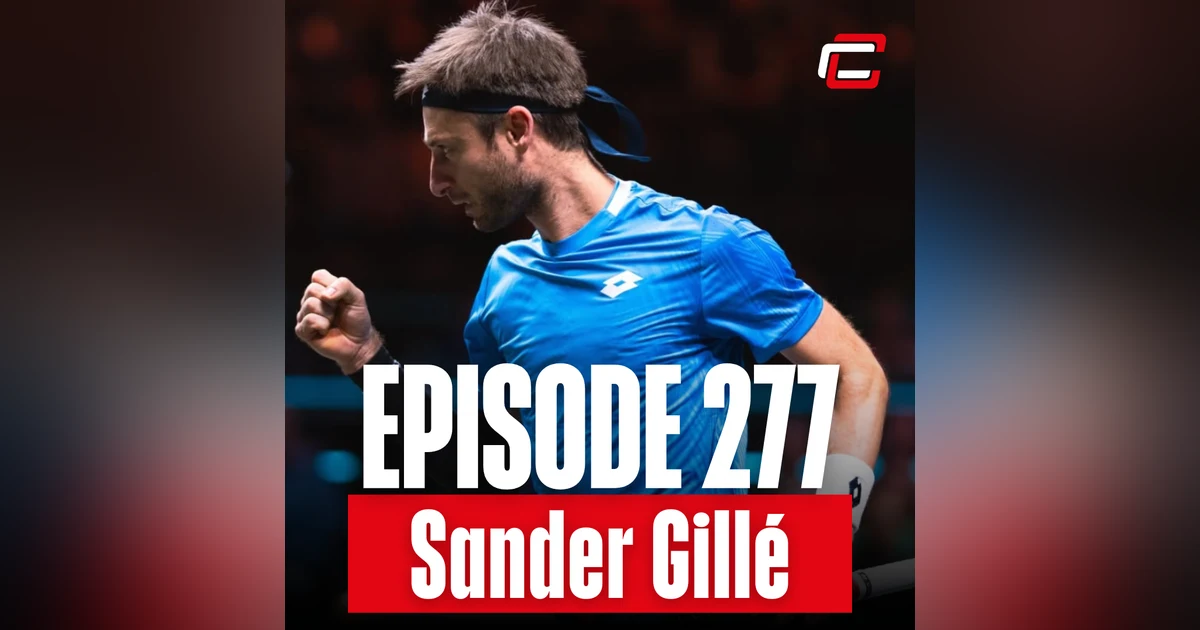
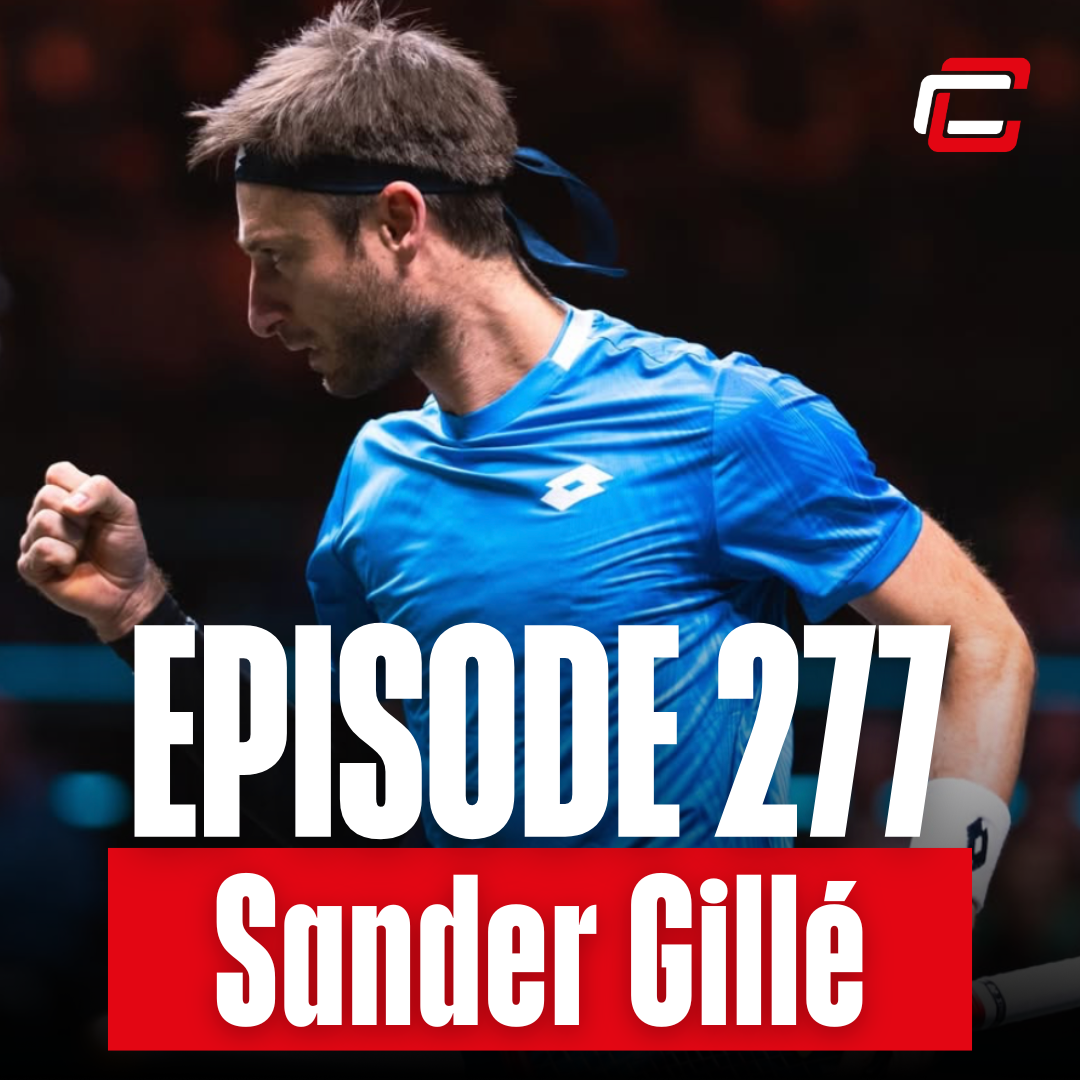
Sander Gillé: The Unconventional Path to the Top of Professional Tennis

 Apple Podcasts

 Spotify

 Overcast

 Castro

 RSS Feed
What if you didn’t have to be a top junior to become a professional tennis player?
In this episode of Control the Controllables, we speak with Belgian professional tennis player Sander Gille, a Roland Garros finalist, Olympic competitor, Davis Cup player and former World No.18 in doubles.
Sander’s journey to the top of the game is anything but traditional. He wasn’t a standout junior, didn’t grow up expecting to turn professional, and at 17 he chose US college tennis simply to continue playing while earning a degree.
After college, Sander decided to give the professional tour a try — funding his early career through crowdfunding, league tennis, and relentless persistence. Years later, that journey led him to the Roland Garros final and the top of the ATP doubles rankings.
This episode is a powerful reminder that there are many different pathways to success in tennis.
In this episode:
- Growing up playing multiple sports before choosing tennis
- Why Sander never planned to become a professional player
- The decision-making process behind his college career in the US and transitioning to professional tennis
- How crowdfunding helped keep his career going early on.
- How injuries shaped his focus from singles to doubles and lessons learned along the way.
- Key insights on finding his game, mental resilience, and balancing success with authenticity.
- Memorable experiences, including playing Andy Murray at the Olympics and reaching a Grand Slam final.
- Reflections on partnership longevity, team dynamics, and future goals in doubles.
If you’re chasing a career in tennis or supporting someone who is, this is a story you need to hear.
CONNECT WITH CONTROL THE CONTROLLABLES
Website: https://www.controlthecontrollables.co.uk/
Instagram: https://www.instagram.com/ctc.podcast/
Email us: ctc.podcast@sototennis.com

Episode 277: Sander Gillé
DISCLAIMER: Please note we use a transcription service, so there may be some errors in the following transcript for the episode. If you can, refer to the audio for the exact quotations.
Dan Kiernan (00:01)
Welcome to Episode 277 of Control the Controllables. And today we've got a great story, a story that you need to listen to. You know, I talk all the time on the podcast. Of course, we all love Carlos Alcaraz, Aryna Sabalenka, but these aren't really the stories that we should be using as role models because it's...
The expectation, it's too high, it's too far away. It's kind of generational talents. Well, today's Sander Gillé, have a distinguished junior career by his own admission, but he's gone on to be a finalist in 2023, a career high of 18 in doubles. His story is humble.
He never really had the intention to be a professional tennis player, but he kept working day in, day out. And some would say controlling those controllables, which is what this podcast is all about. He's a great guy. He's a brilliant guest. And I'm to pass you over to Sander.
Dan Kiernan (01:08)
So Sander Gillé, a big welcome to Control the Controllables. How you doing?
Sander Gillé (01:13)
Thank you. I'm very pleased to be here. I'm good. Thank you.
Dan Kiernan (01:17)
It's a bit of a while since I've done an episode, so that's normally my introduction and it felt a little bit like I'm getting back on the horse after a couple of months off the horse again. we've been threatening to do this for a few months and this is a story that I know it's your story, so for you it's just what it is. But I think certainly for myself...
for people listening in the tennis world. think it's quite a special story really, the way that you've gone through your career. You've had a career high 18 in the world. made a Roland Garros Final. You've had a fantastic career to date. Still a long way to go, but I kind of want to make our way through it. But the starting point always for me, Sander, in the sport that we all love is did tennis start for you? How did it get into your blood?
when you go back all of those years.
Sander Gillé (02:13)
I was just living nearby a tennis club because neither of my parents used to play. But we lived in a small city. from Belgium, so everything is very small. ⁓ I was living nearby a soccer club, tennis club, gymnastics, and the local public swimming pool was there as well. So at the age of six, I just started doing all of these different sports because it was nearby.
Both my parents were athletic. My mom used to swim. My dad used to run. ⁓ but they had no experience with tennis. So they just dropped me off, started doing a little bit of everything. Actually combined most of those sports for quite a while. Cause I never had any specific preference for a, for a sport. And then I think at the age of 15, it seemed like tennis was going to be the one that continued.
But I was just loving nearby, very coincidence.
Dan Kiernan (03:15)
And do you think having parents that didn't know about tennis, the ins and outs of tennis, do you think that was a positive or a negative in your own personal experience?
Sander Gillé (03:28)
Well, to me, if I'm looking where I'm at today, I think it was very positive. I don't know if I had a different career or a different outcome. Obviously you're never sure. And maybe you think, what if, but for me personally, I mean, they were always very supportive. They've never pushed me going into something or practicing more or harder. They just always let me be me.
Dan Kiernan (03:42)
Yep.
Sander Gillé (03:53)
They had a lot of confidence in the coaches I've had along the way. They never intervened, never pushed their opinion. They were just, we just walked the road, trusted the coaches that we had and took it step by step. So in that regard, I've always been very thankful for them to just support me without pushing more. And maybe if they had personal experience, maybe that would have changed a little bit here and there. And then who knows?
What could have been, but to see where I'm at today, I think I'm just very pleased with the way everything went.
Dan Kiernan (04:24)
Yep.
But do you think, I guess that my slight challenge on this, it's a one I probably have myself actually, when I think about my playing career, which was nowhere near as strong as your own career, Sander, but I look back and I'm very grateful, thankful for my parents' support and lack of push in that regard. It was very much my world and life and I think that's enabled me.
To also go on and do different things after my playing career and maybe keep my sanity as well and develop certain elements of my personality. But I do probably look back at mine and go, if my parents had pushed a little more, maybe I would have had a little bit more success. you've almost had the ultimate success. You've made a Grand Slam final. But when you think about and we'll get to it shortly, your career, things did happen a little bit later, right?
Which do you think maybe if they'd been a little bit more pushy finger on the pulse maybe it might have led to a little bit more success, a bit earlier maybe, maybe a singles career? know it's a hard one to reflect on, but I think it's quite an important topic because there's a lot of parents out there that...
Sander Gillé (05:53)
Yeah.
Dan Kiernan (05:54)
Don't quite know how to position themselves.
Sander Gillé (05:56)
No, I totally understand the question. I think there's two ways for me to answer. First of all, my parents could have pushed more, but I don't think in a tennis specific way. I think maybe more in a character way for me being a competitive top athlete because as I said, they're always supportive, but they never pushed me to be—
Dan Kiernan (06:09)
Yep. Yep.
Sander Gillé (06:25)
—like the greatest. I think that's a different mindset or a different character that you have inside you. Because I feel, I don't know if the others agree, but I feel like I'm always friends with everyone around. I think I could be tougher, so to say. Which is something I don't really want to be. I think I'm very happy with the way I am. But if my parents had pushed me more to be like...
tougher at a younger age, then in that regard, I think I could have maybe done something more because now I always thought I'm not good enough to do something special. Um, the others are so much better than me. it was not so much of a confidence thing because I was confident, but I just, I never had any layout for me that stated like you're going to be the greatest and they're all…
a little bit like that in the mindset. So I don't know if they could have pushed me more to do more hours or courts, but I think they could have influenced me differently in a mental state of mind, like to be tougher and to go over my dead body, There I think could have been a big difference, but if we're talking purely tennis, I would say the coaches could have pushed me more.
Dan Kiernan (07:38)
Yep.
Sander Gillé (07:50)
But then they didn't have the experience of having a professional career or however this world looks like. So I would say the parents are more involved with the mindset, with the character building and the coach is more of a tennis way. If that makes sense to you.
Dan Kiernan (08:15)
No, no, absolutely. I think the thing for me on it, it's like, and I've talked a lot about this on the podcast, there's many different success measures. And what I take from what you've said is, if we only focus on the success measure of being winning and ranking and being the greatest and over my dead body, and that's what I'm gonna do…
We potentially sacrifice some of those other success measures, right? you are a very humble guy, but you are someone that absolutely, and not that I know what everyone on the tour thinks, but you are very well liked on the tour. That's very clear. You know, you come across, I don't want to use the word normal, because that's maybe the wrong word to use as well, but you come across as a very genuine, caring, kind.
kind guy on the tour that speaks to lots of people. And for me, that's a massive success measure as well. To have a place where you belong and have relationships and have all of these, that's what life's about as well. We don't just want the experience of winning at all costs. I don't, winning at all costs, but then having enemies everywhere I look. A big success measure for me is having a—
Sander Gillé (09:35)
Yeah.
Dan Kiernan (09:39)
—a place where I belong and I've got these experiences to share with people and I've got friendships that are going to happen after playing Korea. Now do those two things always go hand in hand? Probably not, you know, but I think that's where it's probably, I don't know what you think on that, but getting the balance of those two things, think you've obviously done it very well because you're having a very successful playing Korea and you've got that going hand in hand, which a lot of people struggle to be able to do, get that balance.
Sander Gillé (10:09)
No, definitely. I've, I've mentioned this before in my personal life. Like I wouldn't have it any other way though. I think I rather don't win a slam and be this type of person than having the grand slam success, but having to give up any of my norms. but I do think like…
It could make a difference when I look at other guys at the top of the game and some of them clearly have this different attitude. They're not well liked, ⁓ but they do have a bit more success. And in one way, I think it helps certain of them, but I wouldn't want to give up my inner self in order to reach more success.
Dan Kiernan (11:03)
It also doesn't guarantee it, right? Because I think it has to, and that's where maybe some people go wrong as well is I have to, they see this image and they think, I have to act in that way. But if it's not authentic and it's not real and it hasn't come from the absolute core of your upbringing, then that's almost the worst place to be, right? You're acting like an asshole and you're losing. That's not good place to be.
Sander Gillé (11:05)
Definitely not.
Yeah. No, exactly. yeah, exactly.
As you say, that's why I think like my parents could have maybe installed something earlier on without being an asshole, but maybe to be a bit, have this mindset from a child age, like, Hey, I can reach something, but it was never in the picture for me. was never, I was always top five in Belgium, but never the best or never top three. I didn't get invited to—
Dan Kiernan (11:48)
Yeah.Yep.
Sander Gillé (11:57)
—practice at the Federation because I was just always the first one out. So I just never had any intention of playing professional. So obviously I don't blame them at all. It's just, there was no path for me when I was younger and it just sort of happened. And I just had to learn a lot step by step along the way. And that took a lot of time. That's why I think I've grown so late.
I've come into the picture so late because I've had to learn everything along the way. just, and yeah, for me personally, how it feels like it took too many years, but in the end, I got there, but it took a while.
Dan Kiernan (12:42)
Yeah, but that leads to also longevity in the sport, which you're having right now, right? You know, you're you strike me as someone who could be out on this tour for the next few years as well. You know, so it's like if it all happens a bit too early, then it may be sometimes ends a bit early as well, because the pressures and however it goes. Now, before I jump in, Sandra, I want to hear the story selfishly myself. I want to hear a bit more. I know we've touched on this at tournaments at times, but it's you in January of 2026 became a father yourself.
Know, so now congratulations, you know, which is amazing news. How do you see yourself being as a parent in that regard in terms of, and I'm not talking specifically tennis, because we're not psychos here, we're not talking about.
Sander Gillé (13:17)
Yes.
Dan Kiernan (13:36)
You are two month year old becoming a Wimbledon champion, but in terms of maybe sporting opportunities or musical opportunities or things like that, do you think that you will take the stance of your parents? Do you think you'll take the stance of your parents and add a little bit of trying to add a little bit of belief from an earlier age? What will your parents and style be, do you think?
Sander Gillé (13:38)
Yeah.
Very hard question, but I've actually thought about this a little bit already, not specifically, but of course these are things that go through your mind because everybody is just joking around like, she's going to be the new tennis star. And I know it's for jokes, but of course it makes you think like, do I want her to go into tennis? Do I want to be more in tennis, tennis, tennis?
Dan Kiernan (14:15)
Of course, yeah.
Sander Gillé (14:26)
And I've, I've initially, thought, no, like I thought tennis has been my whole life every single day. Like I would be happy if she doesn't go into tennis. And then I spoke to someone else who was actually saying like, I was when she said one of the WTA coaches and he's like, well, both of my kids are playing both of my sons are playing. And tennis is such a great game in general to develop as a person to learn the correct values.
Dan Kiernan (14:43)
Yep.
Sander Gillé (14:54)
It's given me so much in my life. Like I want my kids to have that too. And of course that makes total sense. So I'm totally open for our baby girl is named Rosie. So whatever Rosie wants to do, I'm going to fully support it in that regard. I want to be like, like my parents, just give her every possible opportunity to whatever she wants to do, whether that is in sports or music or something else.
But I would like for her to have a passion or multiple hobbies just to be out in the world. But then with the experience I have as a professional tennis player, of course, I think I'm gonna try to do a little something here and there along the way of what feels right, how I see her develop, if she's having coaches in her particular sport, just try to discuss with them without interfering because I think it's important to have the coaches do their job and me being more of a sideline person.
But I think on the outside, I will try to kind of guide her through with anything I have from experience and just hope that at the end of her path or road that she'll be satisfied and happy with what she's been able to do.
Dan Kiernan (16:18)
I have no doubt, Sandy, you'll do an amazing job as a parent. That's without a shadow of a doubt. There's something that you said a few minutes ago. You said at the age of 15, you didn't have the intention was not to be a professional tennis player. Now, I would imagine...
You go around the world of tennis academies, you go around the world of performance centers, wherever it might be. The majority of 15 year olds are saying that they want to be, and the intention is to be a professional tennis player. You know, and I have this conversation with players that are at the top of the game that sometimes they call it deluded, right? They say there's a lot of delusion out there.
because maybe their minds don't think in that way. What I love about your story is you were the opposite, right? You were probably quite realistic, but then you've overachieved with what it was. So tell us, what did that look like? Because also you said you're top five in Belgium. So obviously that's a good level, but at the same time, Belgium is quite a small country. So in terms of being top five in Belgium, yes, it's a very good level, but...
It's, would imagine in countries like Belgium, often it's the top two or three that are really truly international. And then you go a little bit lower. What did that junior career look like? Did it, you know, how much were you playing? You you say the intention wasn't to go pro. You then started to make some decisions that maybe tennis was your sport. You said that at around 15. Just kind of paint that picture for us in terms of what that looked like.
And then, I want that to then develop into showing how then the professional, guess, wasn't a dream, but the professional career did become a possibility. then obviously you've gone and lived that as well.
Sander Gillé (18:24)
True, but at 15, it wasn't there yet. At 15, I think I just started practicing more, probably five times a week. So that meant I had to give up the other sports that I was doing because it was just too much to do multiple sports twice a day. So at the age of...
Dan Kiernan (18:45)
And how much were you practicing before 15 then? If you were doing five times at 15, what were you doing before that?
Sander Gillé (18:50)
Probably three or maybe four also, but I would still be doing, would play in the weekends, but also I was playing soccer matches in the weekends. I would go practice swimming during the week, twice a week or three times a week. So it was just a combination of, so it would have been shorter, probably one hour a day, a few times a week.
And then it just kept growing. And then I guess at the age of 15, it would have been an hour and a half a day and an extra day a week, something like that. but started giving up the other sports around that age. Still no intention to any better. It's just, let's, let's try to get better. But then I was one year ahead in school. So I graduated high school at 17.
And then didn't really know what to do because I wanted to go to college, but not even college in the States. Just I wanted to continue my studies instead of playing any, any tennis. But I knew if I would go to university in Belgium, there is no time for practices or tennis at all. So at the age of 17, I didn't feel like I was ready to give up tennis completely.
So that one of the other Belgian guys who had been to college a few years prior, he started a little business in Belgium, helping students or athletes go to the States because they have such a athlete program. So I heard about that and I started communicating with him and we decided for me, it was the right thing to do because it gave me the opportunity to continue playing tennis, which I wanted.
But also it gave me the chance to get a degree. And the idea was when I left to the States at 17, that I would just stop playing tennis once I graduated and started working or continued my studies or whatsoever. So I had never played any junior events. I didn't have a junior ranking. I had a good Belgium national ranking, but obviously that doesn't mean anything to the college coaches.
So I had three good offers, had a few more. I visited three schools, Mississippi state, East Tennessee state and New Mexico. And I doubted for a very long time, but eventually I decided on East Tennessee state who were ranked about 33 in division one at the time I went there. So it's a good school. It's not one of the top programs by far not, but it's also not the, a shittier level school. We had a decent team.
We had a good structure and it seemed like a nice place to go. so I spent my four years there. There was not a single other guy that played professional or wanted to play professional. So we didn't even have the culture of practicing and going pro. It was just, we tried to form a good team. We won conference all four years. So we did have the feeling of, of success which to me was very important, actually.
Like it was fun to just achieve something together and have some personal success as well. so I just gradually improved year by year because instead of practicing an hour and a half a day, I would spend two hours on the court in college and I would start doing gym. had never ever done gym work before the age of 17. Like I did my first, I did my first squats at—
Dan Kiernan (22:21)
Wow.
Sander Gillé (22:24)
—East Tennessee state. So of course I started getting stronger. I started improving on the court and I was just having fun because at age of 17 you're just like, the world is my place. I was out and about having fun with my teammates. So it was a great experience overall for me. I matured. I never was a crazy guy, but I just matured over those four years. And then I—
Dan Kiernan (22:27)
Wow.
Sander Gillé (22:53)
—I came back to Belgium at the age of having my degree and just again being at that stage of what now?
I decided to just give it a go in Belgium. There was an academy opening Kim Clijsters Academy. She had just opened her own, uh, her own place after her career. Um, there was a coach that I knew very well from before. So I was one of the two guys and there were a few girls that just started the academy when it opened. And I was like, okay, let's give this professional life ago.
Started practicing a whole lot more daily and then obviously started playing singles and doubles together, but mainly singles because that's everybody's goal and dream. But even then not expecting to get anywhere because I had no experience. Even in college, my teammates were not professional. Like I had no clue what a ranking point meant level-wise.
So I started playing and then was able to qualify most of the time, but then I would regularly lose in the first round. Like it took me a while to get my first point because that it also meant so much to me because I was like, don't know what this is. I'm going to get a point. So to me, there was also a lot of pressure just feeling how to reach an ATP point. Of course, being aware of the money, everything costs, but I think that's a common issue for all the players.
That just, you start spending money. There's no income. I'm not getting that first point, which felt like something huge. so that was in the beginning, it was very tough, then I did enjoy it overall. I did feel there was an opening level wise and, I just continued and year by year. I said at the end of the year, let's, let's do another year. Let's try again. Cause I feel I'm improving.
I feel my ranking does go up sometimes not as much as I hoped, but it was going up. And I started to understand the system better. ⁓ I started to understand that ranking didn't mean everything. was like, in the, in the initial years, a guy ranked 300, will be like, there is not a chance in the world that I can beat this guy because he's 300 and I'm nothing.
But then obviously you realize like, okay, well, the level is not that much different. Maybe he's played a bunch more, maybe he has more experience. And, like that, I just continued year by year and now we're 2026, a whole lot of years after I graduated and I've never stopped playing. I still kind of have the same, same mindset of just keep giving it a go and see where we get.
Dan Kiernan (25:50)
Very, very refreshing to hear as well, Sander. You know, just the outlook. guess you've almost naturally fallen into a very process driven mindset, which, you know, maybe because you weren't blurred or almost poisoned, which I think quite a lot of junior players can get poisoned by the sport a little bit with the obsession of...
rankings from an early age or into an ITF junior rankings or now UTR rankings or you know, all of these, all of these different things. But a couple of things do jump into my head as you tell that And I'm always trying to ask a question that I think the person listening is thinking because I think people listen to these stories sometimes with a little bit of cynicism of like, okay, but
And the two things that jumped into my head were who was, who was there to guide you through this process, if anybody or were you kind of making your way through? And then and then the second thing that jumps in my head is. OK, great, well done, amazing that you're sticking to this process year on year process. But when you're not picking up ATP points or you're getting your first few ATP points, you're not bringing that much money in.
So how is this also being funded?
Sander Gillé (27:12)
Guidance wise, we had a head coach at East Tennessee State, Yasser Zatini, who was Venezuelan. And he did play professionally ⁓ before seven college coaching. I don't remember what his highest ranking was, but he was a good player. In that regard, I think he just coached us as a whole, but also he didn't share any of his professional...
experiences, which is something we talked about earlier, that I think would have been beneficial. I think it could have helped, but also I can't understand because there was no culture of going professional. So I don't think he expected any of us to continue playing. We never had personal conversations about what it would be like on the tour.
But also I've never asked him. So maybe if I had shown interest in becoming a professional player, like I could have maybe asked him like, Hey, what do you think about this? How was it like? What do you think I should be doing? But also from my side, cause it's always a two way street, right? He never brought it up to any of us that I'm aware of. But also I never asked any questions because there was generally no interest from my side too even wonder what it's like or how it's was.
So in terms of guidance, I don't think there was enough for me to, to really develop the way I could have, which is something I regret a little bit now after all, because I think I could have done a much better job practicing, which doesn't mean I was tanking practice. So to say I was practicing as hard as I could, but it's a different mindset. I think if you're out there knowing what you're working towards.
Like a personal goal, like I want to go professional. want to reach this and this. Now we're just more of a collective, which is nice in college because we were just trying to, our goal was win conference. So we will be out there every day trying to be as good as we could to win conference. But I think it would have been a different mindset if I was like, I want to be out here and I want to practice harder than everybody else because I want to go professional.
And I think if that part was stronger from my side, from inside, I think my coach could have maybe given a bit more of guidance to me. but that was not enough, so to say. And that's why I also mentioned before that it took me so long because also when I came back to Belgium, there were no real coaches that had personal experience from the tour. So they were just, they're good coaches.
They always wanted the best for me. They pushed me hard, but there is no aspect of like guiding your way into the circuit. it's like. I just felt like it took me four years to kind of find myself, how everything works, put away pressure from points and all of that. So I kind of missed guidance. I think it could have helped me get better at a younger age.
Dan Kiernan (30:07)
Yep.
Sander Gillé (30:27)
and in terms of funding, of course it's a big one and I didn't have enough resources when I started. I actually did crowdfunding the first three years of my career. Crowdfunding now I think it's a lot bigger, but at the time that I started it, it was really just coming up, popping up. Cause I remember I was maybe the second athlete in Belgium to do it. And there were not many projects.
Dan Kiernan (30:38)
Okay.
Sander Gillé (30:56)
So I had a lot of help from, from close friends, which I'm very appreciative because there was no way I could have done this myself. So there was a group of people behind me that helped me set it up. And we did crowdfunding for three years and there was a bunch of people that actually helped me. So I'm pretty much thanks to them. I'm pretty much still, still playing. couldn't have done it without.
Dan Kiernan (31:00)
Yep. Amazing.
Sander Gillé (31:25)
And then of course we didn't reach the goals that we wanted to. I also didn't reach the amount of help I needed or hope to get, but I did get enough for me to continue playing. And then the rest was of course my parents who gave me as much as they could in order for me to continue trying. So that combination just got me through to the, until the point that I was able to just break even myself so they didn't have to spend anything anymore. I didn't need the crowdfunding anymore. And then there was a few years that I was just breaking even.
Dan Kiernan (31:58)
Yep.
What is that ranking? What is in and around that ranking? Would you say break even singles doubles?
Sander Gillé (32:08)
It’s such a tough question because it's been a few years and I don't really remember, but I got to the level of playing singles qualies and challengers and then winning challenger events and doubles.
So it was about, about that.
Dan Kiernan (32:26)
600 singles, 150 doubles-ish rankings.
Sander Gillé (32:30)
Yeah, I would
say so something like that. Yeah. Cause I cannot imagine being higher. Maybe it was like one foot for sure. Singles. I my highest was five 80 or something. So I think that's pretty much the cutoff for, for singles where you're maybe breaking even but I needed that. I've always played clubs in Germany, France, Netherlands, Belgium doesn't really have a culture of—
Dan Kiernan (32:50)
Are you playing club tennis? Are you playing club tennis and things like that?
Yeah.
Sander Gillé (33:00)
—paying competition. So I would play in Belgium for fun. I would get a little bit of Netherlands and I played a lot in Germany and France. Did all of that, played national tournaments in the summer also in Belgium to get a little extra. I think for all of us from Europe, I don't know how the system works in different continents or parts of the world, but I think most of the Europeans are doing this, playing leagues everywhere.
And they still do. The whole summer they have opportunity to play leagues. I still do also, but it's usually only a handful of matches per year, maybe one or two in the summer and then three or four at the end of the year.
Dan Kiernan (33:44)
I love the journeys of players that do that because I think it's this ownership and this appreciation, which I think is massive in our sport to give a stronger perspective. It's actually one of my big pet peeves about the UK system because played club tennis, but I remember trying to get certain players to play.
And the LTA would always say, no, no, no, they don't need to play that because they're funding the players. And it's like, it seems like a subtle thing, but it's what has grown over the years in title tennis players that don't really understand what it is to be a true professional, right? And I've shared this story before, but I don't know if you know a guy called Joseph Sirianni.
Sirianni was a, he'll be a little bit older than me, so a lot older than yourself, but he was about a 250, 300 guy, singles, good. And I came across him one summer in a, a money tournament. I played him in the final and his ranking was maybe a thousand at the time. And I had a conversation after the final and said, look, like where have you been? You know, I've not seen you and like your rankings dropped.
He said, said, dude, I've made about four times the money this year than I was making a 300 in the world. He said, I've just gone on a, I've decided that again, it goes back to success measures. You know, I think we often, again, in our sport, we get caught up on the success measure being the ranking, you know, and it's almost, there's an ego attached to that, right? Whereas actually there is many ways of making a living.
You know, and there's more and more now there's ways of making a living. People are doing things with influencing and all that coaching or they're hitting and they're, you know, they're joining it together, but he basically done the French, the German, the Italian clubs, the money tournaments. And he said, like, he was making a hell of a lot more money doing that way and his ranking dropping than he was just kind of going at it to try and get the ATP rankings.
I just, I like that. That way that the sport brings this entrepreneurial way of thinking, you know, and I sometimes think with these bigger federations, you almost, like I was brought up almost thinking that you got selected to be a tennis player. You know, that was almost the mentality. You either get selected or you don't. Whereas actually from a country like Belgium or from most of the countries,
Sander Gillé (36:07)
Yeah.Yeah.
Dan Kiernan (36:29)
Around the world, it's very much go and make your own career, know, which you've absolutely done. Now that takes me into bit around the singles to the doubles, which I always think it's an interesting one, right? You you're sitting at your 580 and then your doubles, you're winning challenges, you may be starting to get some opportunities to play some ATP events. You've also got...
the unique story of having someone next to you as well, you know, in terms of, you know, I think a lot of doubles players are picking up partners a little bit as they go and then getting a more secure partnership once they get into the top 100 in the world. But yourself and Joran Vliegen were from, I believe, 2013 playing the Futures together and doing all of that. How was that decision made to say, right?
Now I'm moving into a different part of my career, maybe a different chapter, and it's now time to start focusing a little bit more on doubles.
Sander Gillé (37:39)
Unfortunately, the decision was made for me because of an injury. So personally, that helped because I think it's a tough decision. I think it's very hard to give up the singles simply because there's a lot more money to earn, but there's also a lot more prestige to be a great player in singles because doubles doesn't get broadcasted or shown.
I think for everybody, it's like the goal to be a great singles player. But Joran and I, so I graduated 2012, Joran graduated in 2014. So he also played college. We kind of have the same story, the same background.
Sander Gillé (38:19)
So we started playing futures together and traveling together just because we were the only two guys in our academy that did that. So it was just logical. Also we just signed up for doubles to get some extra cash and to just enjoy ourselves because we've played a lot of doubles in college.
We're playing well, so it's just, signed in together and we see where it gets us. But the main focus was singles and we both did quite okay. We had some good singles results, but we were really dominating in doubles. We will win basically every future that we played together. So the doubles ranking went up faster than the singles ranking. We got into the challenger qualies and singles and then…
challenger doubles where we were still playing really well. But then at the end of 2016, I had a bad injury in my elbow, which happened during a match. I kind of semi tore my ligament here of the, the elbow. So that sidelined me for probably four months, maybe five months, if I remember correctly, but it was also like the off season. was one of the last tournaments of the year that it happened, maybe October, early November.
Dan Kiernan (39:21)
Okay.
Sander Gillé (39:36)
So I think I tried coming back in March, but then also by that time, my singles ranking had dropped a little because I just had a few good results while doubles had plenty of good results. So that ranking stayed more stable from being gone a few months. And I just had too much pain. Like we didn't do surgery cause it was still good enough to do without, but it took me a while and I was struggling physically to just play singles and doubles, serve that much with an unhealthy elbow.
So there for me was the decision to kind of like, okay, let's just go into doubles. It's gonna be better for my arm. My ranking is higher up. So I don't have to go back to futures now that we're in challengers and we're actually winning challengers that we have a chance to maybe go higher. And then Joran made a, made a big decision actually, cause…
He had injuries as well, not a major one like me, but he had pains here and there. It was just a lot on the body to play singles and doubles every single week. Play well, at least four doubles a week plus two or three singles matches. So you're easily like six, seven matches every single week. So, but he didn't have the injury. So he just decided together, like, let's go for the doubles, which I think is a much harder decision than I had to make based on the injury. I can't.
Had to or I struggled and then it's more logical to go for doubles where we had possibly more success and more chances for but one special thing for us is also, also did everything by ourselves. Like we didn't have a coach. We had a coach of course at the academy. So, but we wouldn't spend many weeks here because you're traveling a lot. And we would always travel by ourselves. And that's maybe also to go back to the.
The previous question about the funding, I mentioned like probably be 600 in the world and singles to break even while winning doubles events, but that's purely like not having a travel coach, not having a physical coach, not having a physio. It's like the bare minimum. And we had never played a tournament outside of Europe until ATP events. So we would play everything within Europe, futures, challenges, like minimize the travel costs.
Dan Kiernan (41:45)
Yep.
Okay.
Sander Gillé (42:00)
And not have anyone with us on the tour. And there we were able to break even, but these days, of course, I think it's only beneficial to have a team around you, but then the funding needs to be so much more. but that aside, that's kinda like end of 2016 is where we made a decision to go full doubles me basically, because I was kind of forced to, and then you're on just tagged along, make, uh, making a ball scene decision to, uh—
Dan Kiernan (42:14)
Yeah.
Sander Gillé (42:30)
—to try for doubles. And I think both of us were super happy that we did because I think we both could have improved in doubles. We could have gone high, but I don't think we would have had the career that we now have. We've been part of the Davis Cup team since 2018. We've played two Olympics. We've had great success on the ATP circuit, like career high rankings, 17, 18. So I think we both are very aware of what we've accomplished.
And I think we're very happy with the decision that we made back in 2017 to focus on doubles because it's giving us so much, so much.
Dan Kiernan (43:09)
In terms of, as you're saying that, one of the self-reflections I have on that decision or when I think about tennis players is this core belief that I think we often have in life, right, in various...
various phases or different stages of life that we have. How much of that, yes, it was an injury. In your heart of hearts, did you feel, actually, I don't fully believe I'm going to be a singles player anyway that maybe lightens that decision? Or was it quite a gut-wrenching decision to make because you had the belief that you could be a top 100 singles player?
Sander Gillé (43:57)
At the time more gut wrenching, but overall I think I, with the background I have, like we discussed in the beginning, I think it would be more of a surprise than really a belief that I would make it. But to be honest, those years, especially, and actually when I started playing, like those few years that I was doing crowdfunding and I was getting to a place where the belief was actually building.
I actually felt that I had a, I had a chance, which was completely 180 degrees different than anything before that. and especially at the time that it happened, since we were in challengers, even though it might not mean so much from, from whoever is listening or people that are at the ATP level, they kind of look down at the challenges. But for me, from having spent a bit too long on the future circuit—
Dan Kiernan (44:28)
Yep.
Sander Gillé (44:56)
—to my feeling to finally get to the stage of playing Challengers. But also at that time, I really had a feeling that my game was finally coming together. I kind of finally figured out what I needed to do on the court to be successful. Because I had several options with my game style, the way of playing. I have a one-handed backhand.
So I play with more variety than most of the guys, but it was always hard for me to kind of know like, how am I going to play specifically in big matches and stronger matches? And at this time when I was in the Challengers coming up, I kind of had the strong belief that I finally found my game. In that regard, having that feeling and then having to step away from it was really hard.
Now, overall, I think it was still a good decision because I do believe that we had more potential in being successful in doubles. think if you had a percentage on it, it's like we probably have a 75 % chance of being successful in doubles compared to 25 in singles. So in that regard, it was a little bit of both, but especially the way I was feeling on the court in that particular moment.
It was very hard to still make that decision to like give it up and try something new because it took me a while to get to that place. And then when you're finally there, it kind of stops. it was hard, but I'm still very pleased. I said…
Dan Kiernan (46:39)
I have to ask you on what you said about you finally felt you found your game. I've got this like, I've got this visual of like, you've turned around a corner and behind a bus all of a sudden you found your tennis game, you know, just randomly or it's just appeared, which is obviously not the case. What is that process? Because it feels to me…
quite often the process holy grail of tennis is finding identity, having clarity, know, identity of character, but also identity of game style, identity of, you know, patterns, you want to put on the court. Just give me a little bit on what that process was leading into you finding your game.
Sander Gillé (47:32)
Great question. Also hard to think about. I think it was a combination of both character, but the way I was coming up. like I said, I had a one-handed backhand, which gets targeted most of the time because it's a general concept that one-handed players, one-handed backhand players, that must be the worst shot that they have in their arsenal. Well, of course, when you look at Stan Wawrinka, it's like not at all.
But usually you're a bit weaker on that side simply because you're only using one hand. So when I was growing up, I was always fairly small, fairly slim. So I did struggle a lot at a younger age because I didn't have the power to go through. So in that way, it kind of helped me by coming into the, in the futures into the big level, because you can, you've been using the slice a lot in order to compensate for the weakness and strength.
And then you're coming up to the, to the big guys, the future guys coming from nowhere. And then you also start watching some tennis, which is something I never did when I was little. And then you see if I've wrinkled, like outrageous backends, you see feather having the most beautiful backends. And it's, I think it's just, you, you try to do what you see, but it might not be effective for yourself. I think that…
was one of the parts that I struggled with in the beginning to kind of know there is no shame in using a slice in an effective way. You don't always have to hit beautiful backends or have like the best winners from that side. at the same time, I was able to create a whole lot of power because I'm very loose everywhere. So I had a big serve, I had a big forehand, and then it's finding the balance to like…
how much am I going to go for it compared to how many errors am I making? And when you're younger, I think it's just you try to go for it. You want to hit winners, but you're not fully aware of how many mistakes you make. And then at the same time, as a third aspect, I think it was a mental part that as I mentioned how hard I found it in beginning to cope with the pressure of getting ATP points. So you start being more defensive…
because that's kind of what happens when you get nervous and when you're nearly there is that you start crawling back, being more defensive, instead of being the aggressive, playing the aggressive way that you do in practice or that you're able to do. So I think those three aspects kind of came together at the time that I was mentioning when I got injured. It's like, kind of, finally found the level of aggressiveness I wanted to, to play at because—
Dan Kiernan (50:06)
Yep.
Sander Gillé (50:29)
—when you have weapons like I had, I think you need to be aggressive. There's no point in going backwards and just trying to make as many balls as you can, even if it means you're going to make more mistakes than some other guys. But also I was using my back end in a way that was smart with a slice and then going for it with a, with a good back end stroke. so I think those, I clicked in those terms. Kind of knew how to—
—how to use my backhands in an efficient way. I knew how to use my strengths in clear way without overdoing it, without crawling back from the pressure of being close to whatever goal you have. I think that's the mix that I finally started working out for myself, which is obviously different for each player. But for me, it was very important to find a balance.
Dan Kiernan (50:56)
Yep.
Sander Gillé (51:22)
Between aggressiveness, slicing, running around, hitting back ends. And so there was a bunch of things in my game that kind of fell together at that time.
Dan Kiernan (51:31)
Yeah, very good.
And to take you to experiences and, know, with your own, your, your experiences together, you won eight ATP titles together, I believe. Obviously Davis Cups, Olympics, which I do want to ask you about the Olympics. There's a lot of British people that, uh, listen to this podcast. So sorry that I'm going to take you to that match. Um, but there's, there's also…
a Roland Garros final in 2023. In terms of that experience, taking now that we know more about you, we know this journey you've been on at 15 years old, you don't even have the intention to be a player, you've done four years at college, great four years at college, but still not really an intention to be or thinking or having the vision to be professional player.
Give it a bit of a go, try it a bit. You know, here you are playing with a mate of yours, just why not? We'll give it a go. And now you're in a Roland Garros final, you know, there's all of these people that have supported you, whether it's crowdfunding, whether it's emotional support. I would imagine so many of those would have been there in Paris or certainly would have been in front of their TVs. Talk me through that 24 hour period leading into a Roland Garros final on the back of everything else that's kind of brought you to that point.
Sander Gillé (53:05)
Think many people might laugh with this, but to me, in a particular way, it was the worst match I've ever played.
And I'm not just talking level wise, I'm talking the whole experience in itself. And I can so clearly remember because it's something I'll never forget, but I've also learned a lot from. That whole Roland Garros as a whole, those two weeks, I think...
We just clicked, I think you need some luck to go all the way in a slam. There's no doubt about that. You need to have high level for two weeks, but you need some luck. And I remember beating Mektic, Pavic in the first round who were second seeded or third seeded. So it's a big match, but we're ready for it and we know we could be dangerous. But also know that in the third round, we get moved to center court.
Because it was a walkover from one of the girls and we play Roger Vasselin and Santi Gonzalez. And we're down five, two or five, three break in the third. And then they cramp or they have an injury when they have to serve it out. And somehow we come back and we win in a super tight break. And all of a sudden we're in the quarterfinals for the first time.
So that's what I mean, but we had some luck, but we were just playing really well and taking it match by match. then we get to the final, but along the way, because we start doing these interviews also, you know, we, never get asked for interviews and then you, you win a couple of rounds and then there's like interview here, interview there. And everybody's step by step round per round. There's more attention, of course, but there's also more people to start writing me…
individually to like to my WhatsApp to my Instagram. Wow, like what you guys are doing is unbelievable. Like who could have ever imagined. And the word I start reading the most is like, enjoy, like enjoy the moment, enjoy the final, like just have fun out there. And to me,
I did have a major mental shift in 2019 once we started winning ATP events. I had a strong belief from that moment onwards that I could make it all the way, which is weird because it came from nowhere, but I had a huge mental shift. So to me playing at the biggest stages, it never meant something more because I never dreamt of it.
So that role and Gareth, I was just going match per match, but we were beating some of the top teams and you kind of feel you're in the flow because everything is going your way. And I kind of got very distracted by the outside because to me, was not a surprise that we were in the final. To me, it was a moment that finally everything clicked, but I knew for several years that we had the level.
I knew that we were working hard enough to make it there. I knew we were just missing like a little bit of luck here and there, like maybe a point here and there before. So to me, just reaching the quarters first, getting through that, reaching the semis, getting through that, reaching the final. To me, it wasn't a surprise at that time. It was more of like, I knew we were able to do this and now we finally did it.
And from all the outside information that I got is like unbelievable and joy. And I struggled so, so much those 24 hours, if you're thinking, because I went from just taking it as a, another match that I've always done. Like I don't, never really feel nervous playing a match because it's just my job is what I have to do.
Dan Kiernan (57:03)
Yep.
Sander Gillé (57:15)
And they're also, I never dreamt of myself holding a grand slam trophy. So to me playing that final didn't mean more than just I'm aware it's a grand slam final and I'm aware it's more prestige, but it's not a lifetime goal. So there was no more pressure for that. And I felt horrible in the world because I was just trying to enjoy, which is something I've never thought about before.
It's not that I'm not enjoying myself out there. It's just, I was thinking I needed to enjoy this moment so much that I couldn't. And our level dropped dramatically. Like we didn't play a good match. There was no atmosphere because it got super late and we play after the women's finals. So it started raining. So they closed the roof. It's like the whole experience in itself was horrible for me.
And then of course, like you give it some time and you reflect on, on the whole tournament, the whole week. And then it's kind of a shame that we didn't get more out of that final, but I remember it being like a wonderful two weeks that kind of had an anti-climax at the end. And I feel like I lost myself in the out, in the outside bubble there that I had to—
Dan Kiernan (58:33)
Yep.
Sander Gillé (58:42)
—feel something that I wouldn't feel personally and I wanted to do something that wasn't coming from myself. And in that regard I've always found it a little shame that I couldn't get more out of that moment. But I never felt pressured for being in the slam final or being there. I think it was just very much deserved based on everything we had gone through. I think it was a wonderful reward for both of us to live that moment…
From all the way that we went together, like from futures together. Like I will never forget that aspect. So in that regard, like it was probably the best moment we've had in tennis. It's just a shame that we couldn't do something special in the end.
Dan Kiernan (59:41)
In terms of that, firstly, thank you for sharing that because I think that is a really authentic, vulnerable thing to share that I think a lot of people will take a lot from. And I think it's highly, highly interesting.
You know, and I think the bit then for me with doubles, if I take your partnership with Joran, you're quite unique, okay, outside of probably the Bryan brothers, you know, outside of the Bryan brothers who are blood, so they've spent pretty much their career together. You know, it's not overly normal to have a partnership for so many years.
Sander Gillé (1:00:23)
Mm-hmm.
Dan Kiernan (1:00:31)
18 months later, that partnership did come to an end. And I guess what would be great to understand would be what that process was like of how that partnership came to an end. But then all of a sudden, what the process is like to find a new partner, you know, and how you now go about, you've just fallen into this almost brotherhood partnership for so many years. Now you're a professional, you're a legit
top player in the world and you've got to try and now connect with somebody else and find another partnership, know, the challenges around that. So it'd be good to understand that little part of your journey as well.
Sander Gillé (1:01:16)
Yeah, sure. It's by far the hardest decision we've come across. There were so many things that we did really well and we had good together. So you're always aware of what you have and what you don't have. think that that made it special for us also because there's a bunch of guys, like you said, that just split after, I don't know, a few months, one year…
maximum two years, always looking at results, always looking at, can I find someone better without even knowing what is better because what are you looking for? So Joran and I, did have ups and downs like everybody, but we always stuck together. We had one really rough year that our ranking dropped dramatically from being a good team to like one of the worst.
We stuck together and we climbed back up. So that's something that already made us special to just stick together, even in the hard times and then go back up. Now we did feel like we were hitting the same. Stop or spots. I think out of five years, we finished four out of five in the top 13, but never in the top 10. So we never made it to the, the Masters, the year-end finals, or not even as an alternate, because you have to be top 10. So we're at number 11, number 12, number 13 for almost five years straight.
So at one point you're also thinking like, we able to switch something? Because being together for 10 years, you kind of get stuck in the same patterns. The practices kind of look the same. You know each other and then out. You're stuck in something similar.
And then it's nice to get new input either from a coach, because we've started working with some coaches along the way to get new input to make the next step to reach a further goal. But in one way, it's also nice to have input from a different player, because now we would only play with someone else when one of us was injured, which didn't happen very often.
A week here and a week there. And you pick up new stuff. So it's just, it felt weird not having taken the chance to see what that's like. Having to end the career with what if...
There was something else. What if we've never given it a try? But also always keeping the option open to, to come back at some point together. It's like, think what most other teams or other guys struggle with also is just being open and without going behind the back first, like finding new partnerships and then telling the guy that when it's already done.
Like, let's split up. It's like here we just, we split and then started looking for, for new guys. And, and one way that makes it easier to just look at each other. Like now we still play Davis Cup together and I feel like we're, we're still good. Well, other people that split, they have no interest in seeing each other, talking to each other anymore. It's like, it ends bad.
Dan Kiernan (1:04:41)
Yep.
Sander Gillé (1:05:06)
For us, it feels still good. There's still the option to practice together. There's very much the willingness and the happiness to play together in Davis Cup. Who knows for Olympics in 28 in LA? Who knows if we come back on the ATP circuit together? But we've seen each other now after splitting.
I've seen his game and I guess he's seen mine. And there is, there is things that I clearly see that we have improved that maybe we could not have improved by staying together. If that makes sense. I think you get new influences, new input, having a different partner forces you to adjust your game, adapt your game. And in that way, I can only talk from my side, but—
Dan Kiernan (1:05:48)
Yep.
Sander Gillé (1:06:01)
—that feels like I've improved a lot, both in my game, but also mentally. You have to, you have to grow and adapt more with different people. But then at the end of the day, I still think it's best to have a fixed partnership rather than just hopping around from partner to partner, because you don't build anything. Just, you go from result to result. And as soon as you feel it's not good enough.
You switch, which is kind of what I experienced last year. And I think you're on, had bad luck with his partners as well that, that in the beginning of, of 20, 25 that partnerships didn't last long because he got put aside. I got put aside after half a year and it's something really bizarre for us because we've always had…
the mindset of doing something long-term. Like we've done it for 10 years. And I don't think either of us was expecting to have another partnership of 10 years, but at least to build something constructive. And that is just the biggest flaw that we always knew. If we would split, that you end up being in this pool of other guys not having that mindset, not knowing that mindset—
Dan Kiernan (1:07:02)
Yep.
Sander Gillé (1:07:26)
—not caring enough about the other person or this person feelings. So in that regard, that's something that we've always valued playing together that we still value at this moment. But it has a lot of good things, I think, for development to play with different partners. And definitely has some awful flaws because you're with guys that...
Dan Kiernan (1:07:37)
Yep.
Sander Gillé (1:07:57)
Yeah, that have a different vision or a different mindset. And I think at this point though, we've found two partners that we feel comfortable with because he's been playing with Behar for a long time, since April last year. And I'm with Sem Verbeek since the end of last year. It's just, I think we feel comfortable with them in a way that we want to work together.
Dan Kiernan (1:08:15)
Yep.
Sander Gillé (1:08:22)
And the results clearly don't show yet for both of us because I think our rankings are way worse than they should be. But I also believe that we will climb up again because I know what I'm doing every single day. And I know that what Sam and I are discussing and working towards and from being there myself before, I'm very confident that we will succeed in climbing up again.
And I know what your own level is and I know what he's doing. So I'm sure that he will climb up again as well. And in that regard, I think we should just be happy with what we've accomplished together and let's see what the, what the future holds.
Dan Kiernan (1:09:07)
There's so many more things I'd love to jump into, but it feels like that's a nice time to end this conversation. I would love to chat again because I think your perspective and your outlook, I think needs to be heard by more people, Sander. It's clear to see why you've had the career that you've had to date. It's also clear to see that there's a lot more to go on that.
You know, I, I thank you for, for how openly you have shared on, everything. I can't let you go though, before we do our quick fire round that we always do a Control the Controllables. So are you, are you up for the quick fire round?
Sander Gillé (1:09:53)
I am as long as the connection keeps it.
Dan Kiernan (1:10:01)
So, Sandra, welcome back. There's anyone that's watching this on YouTube will notice different locations, different t-shirts, maybe more tired eyes, certainly on my side. And this is a day later. This is one of the challenges of the…
of the ATP and WTA tour, finding good wifi. And we had a great conversation yesterday about wifi was in and out. We got to the quick fire round and kaput it was out. So are you now ready for the quick fire round, Sander?
Sander Gillé (1:10:39)
I guess so, it challenging start. Let's see what I can do.
Dan Kiernan (1:10:43)
So what does control the controllables mean to you?
Sander Gillé (1:10:47)
For me, I would like to just stick to my game plan so I don't get distracted from any conditions or opponent's behavior. Just stick to my plan so I can control what I have inside me and what we discussed before.
Dan Kiernan (1:11:02)
And certainly just on that, I know this is quick fire, there is lots of things that can take you out of that. I mean, as tennis players, especially the scoring system for doubles, it feels like all of a sudden a shank lob, a bad call, a wrong net called call, a broken string. There's so many things that can kind of pull you out of that moment.
How are you able to stay in that moment and stay sticking to your game?
Sander Gillé (1:11:28)
It's very challenging though, but I've had bad experiences before where I do notice that I'm going out of the match. So I've been working on it hardly with a mental coach as well, which is a big part of today's game in my opinion. On the tour, I think if you want to reach the top level, a mental aspect is super important. So for myself, I've been working on it a lot…
lately and I'm just trying to do my best mental wise also and stay in because I know as soon as you drift off your chances of winning go down very much.
Dan Kiernan (1:12:05)
Roger or Rafa?
Sander Gillé (1:12:07)
Roger.
Dan Kiernan (1:12:09)
Carlos or Jannik?
Sander Gillé (1:12:10)
Jannik.
Dan Kiernan (1:12:12)
Not many people say that. Serena or Venus?
Sander Gillé (1:12:14)
Let's go.
Serena.
Dan Kiernan (1:12:20)
And give me your craziest tournament story.
Sander Gillé (1:12:26)
It's not rapid, but it's a story from Uzbekistan futures. It's a long time ago. Joran and I would go to Uzbekistan. It was the first time for us. It's kind of a weirder country because they don't have that many rules. we got in, we get this little paper, which they don't really give out anymore in other airports. Asking how much money we're bringing in. Of course we say zero because we're not bringing in anything.
Dan Kiernan (1:12:29)
That's okay.
Sander Gillé (1:12:55)
But without realizing that most of the payments over there are done in cash. And we're used to just paying by credit card and everything. We had a decent two weeks, two weeks of tournaments. we get the prize money and cash. So the tournament director asked us like, Hey, you still have that paper, right? Because you need it. And the past, have been some problems with players going back that they just take the prize money away.
So we start stressing and one of the tournament drivers who's taking us to the airport, says, look guys, I think you need to hide this money. Like if they find it, they're going to take it from you. And we're thinking, geez, this is some of the most money we've made the last few weeks. We're getting it in cash. We don't know what to do. And we decide to, before entering the airport, we go to this bar and we start hiding the money under our socks.
Cause that's what he recommended. So we walk in, we get through the gate. Of course, the guy is like, where's your paper? He said, well, we don't have any. He's like, okay, go fill out another one. So of course we have to fill out that we don't take any money out. So that's fine. We give him the paper. We walked to the screening, the customs, the monitor. First time we see is like, take off your shoes. my God, not the shoes. We put the shoes in the basket.
We walked through, Joran goes first. He passes, all fine. I go second. As soon as I stepped through the monitor, it beeps. Like, my God, my heart's pounding more than any match ever has. And the guy starts touching, feeling what I have everywhere. So he starts on top. He goes all the way down, reaches my ankles. So he's this much off from, from the money below my socks. And I'm looking, I'm looking at Yoram. I'm like.
Dan Kiernan (1:14:47)
No.
Sander Gillé (1:14:49)
We're so screwed. And he stops right at my ankles and he's like, all right, you can go. So we passed her. We thought, my God, this was the worst. Our money completely soaked of sweat under our feet. But we managed to get home with our little prize money.
Dan Kiernan (1:15:10)
Brilliant, I love it. And what about accommodation? Give me your best ever accommodation that you've stayed in at a tournament and your worst.
Sander Gillé (1:15:22)
Wow. Best might have been Doha. I just liked it lot. It was very fancy. I think it was a Ritz-Carlton in Doha where of course the facilities are really, really nice. It's very luxurious. There's the pool outside with the warm weather. So I enjoyed that. Well, actually now that I've talked about Uzbekistan, it comes right back to mind because the shower was leaking.
The bats were cracking everywhere. Was barely any hot water. And I was sharing the room at Joran, which was not enough space for the both of us. So that might have been the worst I've ever been.
Dan Kiernan (1:16:03)
I hope there's no one from Uzbekistan listening to this podcast, you know.
Sander Gillé (1:16:06)
I'm sure that they have improved over the years. Must be great.
Dan Kiernan (1:16:12)
I'm more worried about the government if they're listening to it, know, retrospective taking money out of the country.
Your favourite pre-match snack?
Sander Gillé (1:16:14)
Not sure to the match it will be a gel from 6D, a peach flavored gel. Just before a lunch I would usually have pasta or rice with chicken. Very standard.
Dan Kiernan (1:16:36)
If you could take one shot from another player and add it to your game, what would it be and who would it be? In history, doesn't have to be a current player.
Sander Gillé (1:16:47)
I will take Stan's backhand. Lovely shot.
Dan Kiernan (1:16:51)
Unbelievable,
It's just an absolute joy and we still get to watch it for a few more months.
So if you could play one more match, win or lose, just for the experience, what would it be? So not necessarily Roland Garros because you want a different outcome, but just to have the experience, what would it be?
Sander Gillé (1:17:08)
Mm-hmm.
Then I would guess a Wimbledon final. Simply think Wimbledon is one of my favorite tournaments because it's one of the most beautiful places I've played tennis at. I've played on every center court except for that one. So that's something that's missing as well that I would like to experience. And just simply because of the history there is around Wimbledon, I think that would be the place and the match to play a final over there.
Dan Kiernan (1:17:43)
And at this point, I said earlier in the chat that I would ask you, there's a lot of Brits that do listen to this podcast. Our most downloaded guest of all time was Sir Andy Murray. You had the experience of playing him in his final Olympics and alongside Dan Evans, who's also been on the show a few times. And I know it wasn't a favorable result for you, 11-9.
In the third set, but just talk us through that experience of playing Sir Andy Murray at the Olympics at Roland Garros.
Sander Gillé (1:18:19)
Very special of course. I've looked up to his whole career but I wasn't really following any specific tennis players so in that regard I wasn't a fan of his game but I did admire his fighting spirit because I do remember watching at my grandpa's place when I was a little kid I saw him already play at Queens and that's the only tennis tournament in my life that I've ever watched on TV.
I remember it well and of course he was there coming up and I remember his mom cheering and I was like, who is this? And then I got to play on the tour and I just met him several times and saw him compete. Then as I understood what it took to be on the tour and how tough it is, I really started admiring his fighting spirit and his game. And then of course I got finally a chance to play against him in his last tournament.
Dan Kiernan (1:18:44)
Wow.
Sander Gillé (1:19:14)
We had two match points and I remember, I actually remember serving at nine eight and it did go through my mind. It's one of these things that we just talked about that sometimes you get taken out of the space. I remember only having it three times in my life, actually thinking about who I'm playing. And I remember at nine eight serving, I'm going to finish Andy's career.
Because that's something that the media was talking about before. It's like, Ooh, you have a chance. I was like, yeah, we're going to do it. We're going to, we're going to end it. And, yeah, we ended up losing 11-9. It hurt like crazy. Also the next day, I think they lost the following match and we saw on, on instagram and social media, the emotions that they had that he had after the match, but Dan also shared with him…
the crowd going crazy. And at that time it would have been something truly amazing to experience. Not beating him, but being there for those last moments and those last emotions. it's something that, yeah, I think it's a shame that we couldn't experience because it was a beautiful moment, even online on social. But yeah, it's one of my most heartbreaking losses in my career to not get over that line.
Dan Kiernan (1:20:41)
I get goosebumps when you tell that story. That's what Andy Murray means to me and I think to all British people. Just in terms of how he changed, he just changed the opinion in the whole country really. I for one have him down as our greatest ever sportsman, not just tennis player for what he did.
Yeah, for you, he didn't have that moment, but to still have that moment of playing on the larger scale. Where does the Olympics sit for you? Because I know, as an example, Gaby, Gaby Dabrowski, I, as you know, work with, I know that Gaby has the Olympics right at the very top for her of experiences and things that she wants to do. Where do you hold the Olympics alongside all the other events or the more specific tennis events?
Sander Gillé (1:21:34)
I'm totally like Gaby. Olympics is by far, by far the most important event for me simply because of, the thing I used to watch when I was little, even though it's only four years. I wasn't following tennis in particular. didn't have any favorite players, like I said. So the Olympics was something I would watch just two weeks straight. I loved all the different sports, the disciplines. It's in sports, when we're talking sports is by far the highest…
thing you can reach. A medal is just the biggest thing there is. Grand slams, we have four every single year. So of course it would be special, but the Olympics is like you get one shot, maybe two shots. For me, it's like the pinnacle of sport in its whole. So by far the Olympics I put on top.
Dan Kiernan (1:22:25)
Very good. Who's the funniest player on the tour?
Sander Gillé (1:22:30)
That's such a tough question.
I go for Monfils. I like him a lot but he's also a nice guy because there are some other funny guys that I'm not the biggest fan of but Gael is funny and he's a great guy.
Dan Kiernan (1:22:47)
We'll do a podcast in 10 years and you can tell me who they are. I'm not going to put you in that position whilst you're still live on tour, know, to pick up your sushi and all of a sudden someone turns to you and says, I heard what you said. So I'm not going you in that position.
Should there be a medical time out or not for tennis players?
Sander Gillé (1:22:52)
Yeah, true.
Okay.
Yeah, think they should. Of course, it will be abused, but I do think it's important that if something happens during a match, you're able to get treatment. So even if it gets abused, I think it's still important for the players who actually have a bad injury throughout that they can have some treatment.
Dan Kiernan (1:23:29)
Okay. And what's one rule change you would have in tennis if you could make one rule change?
Sander Gillé (1:23:36)
Well, if I can speak for the doubles, would definitely get rid of the no-add. Without a doubt. Think it's too many cases. It's a little bit of luck. I don't mind the 10 pointer because I think it's long enough to make a difference. But the no-add and doubles, I think it should get rid of.
Dan Kiernan (1:23:57)
Yeah, for the observer, it's kind of fun, it's unbelievable how you can dominate a match for one hour, dominate a match for one hour, and you can just lose the wrong no-ad point, and all of a sudden, you're a set-all. I think that brings excitement, right? For the viewer, for players and coaches, you've got to be on the edge the whole time.
Sander Gillé (1:24:06)
Mm-hmm. Yeah.
Yes.
Dan Kiernan (1:24:24)
And last question and I always ask this question, it's my last question of every episode that we do but think carefully because you then have the baton to use an Olympic term. You you are passing the baton on to somebody else and you are also going to help us. That's part of the responsibility. It's in the small print of our WhatsApp messages. Who should our next guest be on Control the Controllables.
Sander Gillé (1:24:55)
Sem Verbeek, my new partner. has some great insights. He's a good guy and some great stories.
Dan Kiernan (1:25:03)
I look forward to the Wimbledon 2025 mixed doubles championship stories as well. And you've got his number, you've got the hookup.
Sander Gillé (1:25:12)
I've got you covered.
Dan Kiernan (1:25:15)
Sander, you've been a star. Sorry that it took a few attempts, a few wifi attempts, just for anybody that is listening to this. know, Sander was an absolute star in how he's given his time for this episode and dealt with lots of, lots of patience and showed his true colors. All the very best for 2026. As we talked about earlier, one of absolute the good guys on the tour, wishing you all the very best. Thank you.
Sander Gillé (1:25:42)
Thanks a lot Dan, pleasure to be here and best of luck to you too.
Dan Kiernan (1:25:47)
And I don't think I exaggerated at the start when I set it up. know, Sander is really one of the good guys on the tour. And you know, you can just see the humility that he has, 35 years old, been through so much, you know, and I love these stories because think one of the things I love so much about tennis is the hope, the entrepreneurial ways of the sport. And...
I think we all get a little bit locked into, well, I'm not going to be a professional tennis player. I'm not going to do that, but it's having the real purpose of why you play the sport. Play for the joy, play for the love, play for the purpose, play for the, the, the want to get better every single day and spend time with your friends and have experiences. And who knows how your journey then opens from there. And I think in 2026 we're full and I have my own tennis academy, but we're full of tennis academies. We're full of agents. We're full of people…
that are maybe blinding parents and players with this professional dream. And it is a possibility, and I will never write anybody off. I'm sure lots of people would have written Sander off. Can't be the reason, the main reason why you are playing the sport. And I hear all the time parents say to me, we are in this not just to go to US college. We're in this to be professionals. It doesn't work like that. It doesn't work like that. This is not your journey. Parents listening, this is not your journey.
Keep providing the opportunities. People like myself keep providing the right environments, but it's then for the person to find their own way with the right people, obviously guiding, but even we talk there, know, Sander didn't receive the best guidance at times, you know, and it wasn't even an option on the table, but he found his way. And then he found his way to the right people. it really does…
get on my nerves, the amount of conversations I have where people are just saying with kids age 10, 11, 12, 13, 14, we're just here because we're going to be a professional tennis player. We're not interested in them just going to US college. No, no, no, no. And I'm sorry about the rant. If you listen to this podcast all the time and you've made your way to this, then I apologize that this rant has come out. However, I stand by that message, you know, and this is why I love a story like Sander. Send it on…
get it out there far and wide. People need to hear this. This is the realities of our sport. It's amazing sport. So many opportunities open, but you can't control them. We can't start to try and age 12, put people into these boxes. We don't know the way it's going to go. All we can do is provide the right opportunities, the right environment, and the right levels of support for them to go and fly in whatever direction that they do. Guys, it's great to be back.
We do have more coming your way. The Wi-Fi is completely and utterly terrible here in Indian Wells. The tournament isn't. It's incredible if you've not been here in Palm Springs. I promise you should make your way to tennis paradise at some point. It is amazing, but the Wi-Fi has made it more difficult. But we do have a couple of guests that I'm going to let you know about that I'm going to try. We've been trying for a couple of weeks to talk. One is Adam Jones. Anyone that follows Adam Jones on Instagram?
Forehands and flat whites. He is a great guy, an amazing hitting partner. You know, been hitting with Carlos Alcaraz, Elena Rybakina at the start of the year Melbourne, but also here in Indian Wells and has also won a pro tournament last week. And then we have Maxime and I'm not even going to pronounce his second name until he lets me know exactly how to pronounce it, but he is the coach of the sensational Vicky Mboko…
who's taken the tennis world by storm. a couple of great guests coming your way over the next couple of weeks. Anyone else you want to hear from, please do get in touch. But until next time, I'm Dan Kiernan and we are Control the Controllables.


